Municipalities know it well: a clean city is more attractive, pleasant and safe.
To ensure a good level of urban hygiene, in addition to managing the waste cycle, municipal administrations are also required to maintain streets and clean squares.
The sweeping of public spaces is an activity that only developed during the Industrial Revolution, in the mid-1800s, and can be performed manually or with the use of motorized machines: street sweepers.
Street Sweeper: Features
Street sweepers, whose main function is sweeping and collecting leaves and/or debris from streets, are essential to prevent potential accidents and inconvenience to the population.
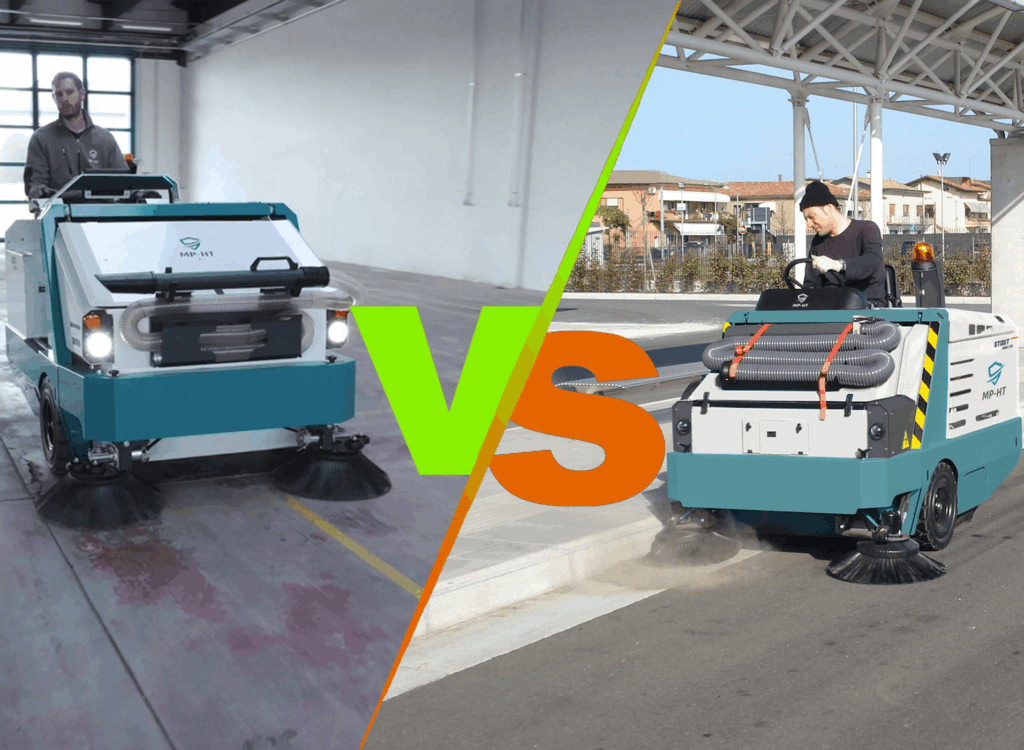
Designed to clean large areas, primarily outdoor, unlike those for industrial use, urban sweepers are characterized by:
- the ability to work on uneven terrain, thanks to shock-absorbing wheels;
- the large debris container which in most cases is positioned on the rear of the machine;
- the operator seat;
Being equipped with license plates and registration documents and consequently the operator using them, in compliance with the Highway Code, must hold a Class B license.
Operation of Street Sweepers
Based on the method used for collecting debris, street sweepers are mainly divided into two main categories.
Vacuum Sweepers
In these machines, side brushes convey debris toward the center of the machine at the suction tube opening. Thanks to the airflow generated by the suction fan, debris is vacuumed and rises through the tube to end up directly inside the debris container.
In these sweepers, water use is necessary, not only to suppress dust generated by the rotation of the side brushes but primarily to enhance their collection effectiveness, for both solid waste and liquids.
Mechanical-Vacuum Sweepers
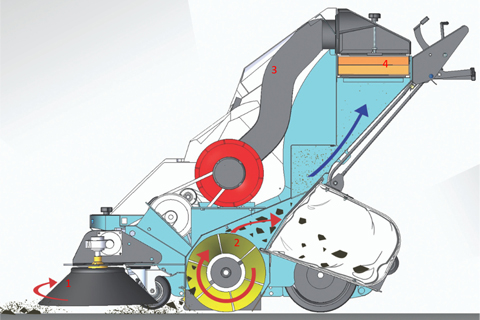
In these sweepers, debris collection occurs mechanically by means of side brushes that convey debris toward the center of the machine where the central brush throws them, at high speed, directly into the debris container. Dust is vacuumed thanks to the negative pressure created by the suction fan in the container and is retained by the dust filter.
Unlike vacuum sweepers, these machines can work dry – water is used only to suppress dust on the side brushes – and have the ability to collect even bulky debris.
Types of Street Sweepers
As in the automotive world, the increasingly widespread environmental awareness has also led cleaning equipment manufacturers to diversify their range with various power options. Street sweepers can be:
Combustion Engine
DIESEL or GASOLINE, engine-powered sweepers are still very common, especially when it comes to large machines with debris containers with capacities exceeding 1,000 kg. They are chosen because combustion engines guarantee high performance, power and above all great autonomy.
Battery Electric
Electric sweepers powered by batteries are increasingly popular and appreciated especially by municipal administrations attentive to environmental sensitivity.
Various battery options coexist in the market: from the classic lead-acid, to gel, to the most recent LITHIUM-ION.
Nowadays, thanks to continuous technological progress, even electric sweepers are capable of achieving excellent performance and ensuring good working autonomy.
Street Sweeper: How to Choose
Every city, large or small, has specific cleaning issues and needs that depend on multiple factors. Knowing how to evaluate and choose the most suitable street sweeper ensures it becomes a valuable investment for the entire community, guaranteeing beauty and public safety.
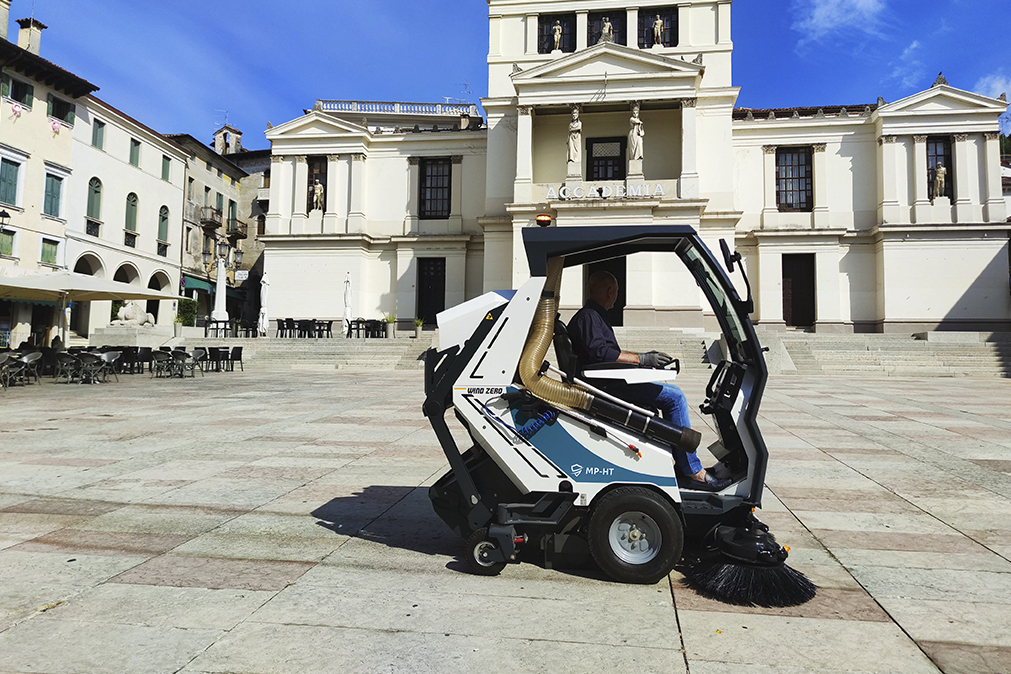
The type of area to be cleaned and its dimensions are the determining factors in choosing the most suitable street sweeper. For cleaning a street, for example, a large cab sweeper, ride-on, with a very large container is better suited. Conversely, for cleaning a pedestrian street in a historic center, a compact, electric and quiet machine is certainly more effective and suitable for achieving its purpose.
Other elements to evaluate are:
- the type of surface: asphalt, cobblestones, porphyry, etc.;
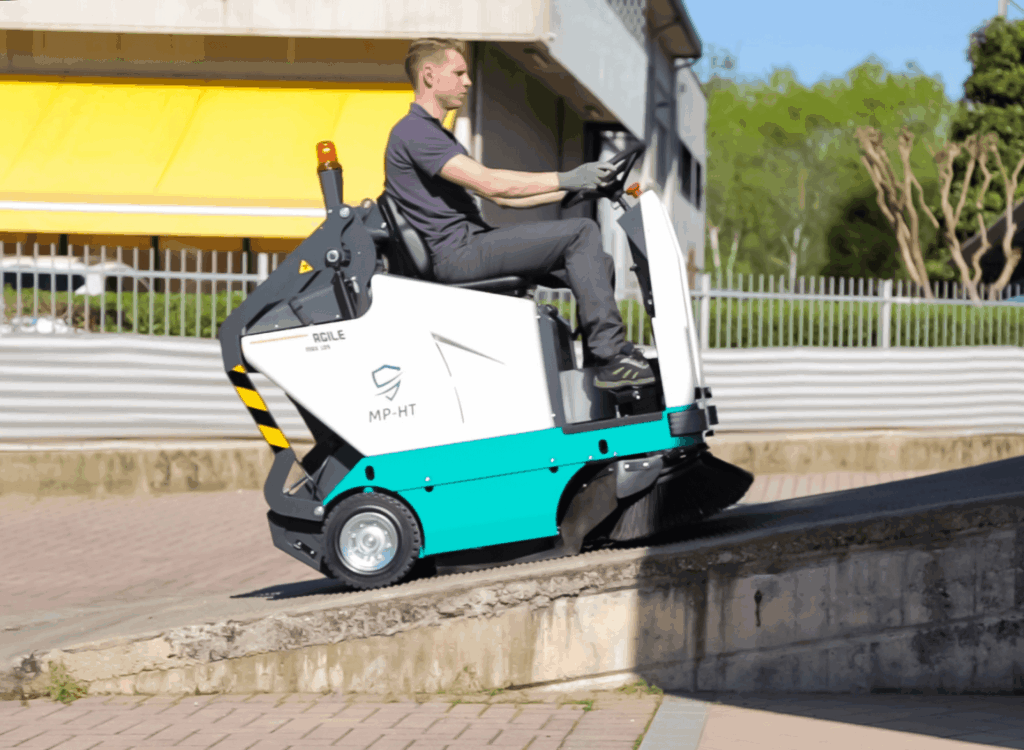
- the presence of obstacles, inclines, ramps, etc.;
- the type of debris: leaves, pine needles, grass, bulky waste, etc.
MP-HT Sweepers for Historic Center Cleaning
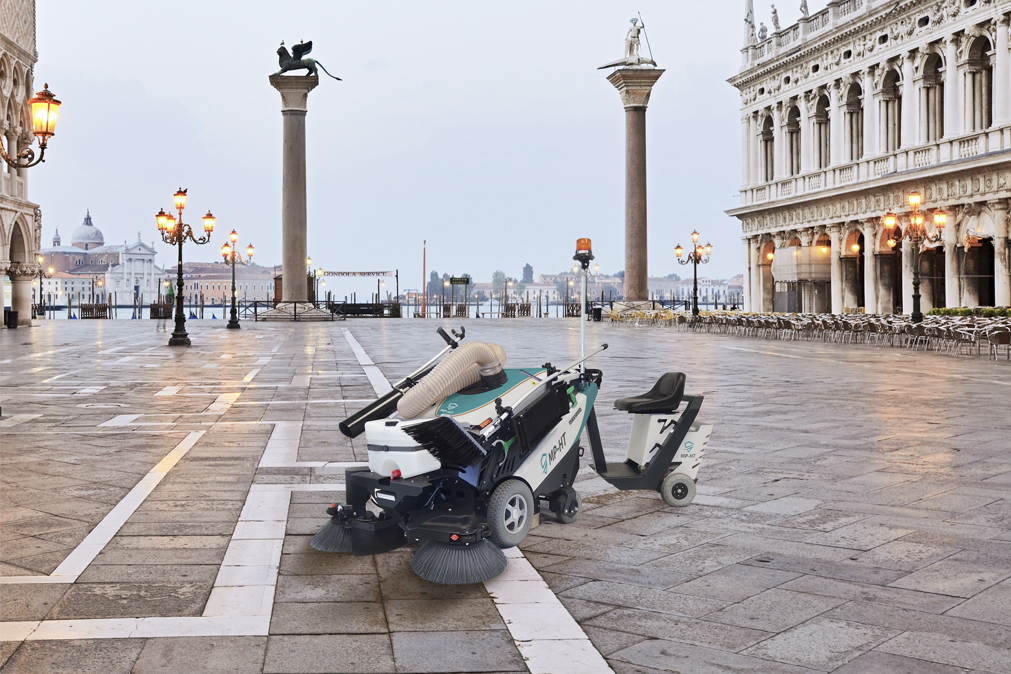
Always focused on listening to needs and attentive to providing solutions to the requirements of operators and all citizens, MP-HT has created a line of urban sweepers, fully electric with low environmental impact, simple to manage and safe for those who use them.
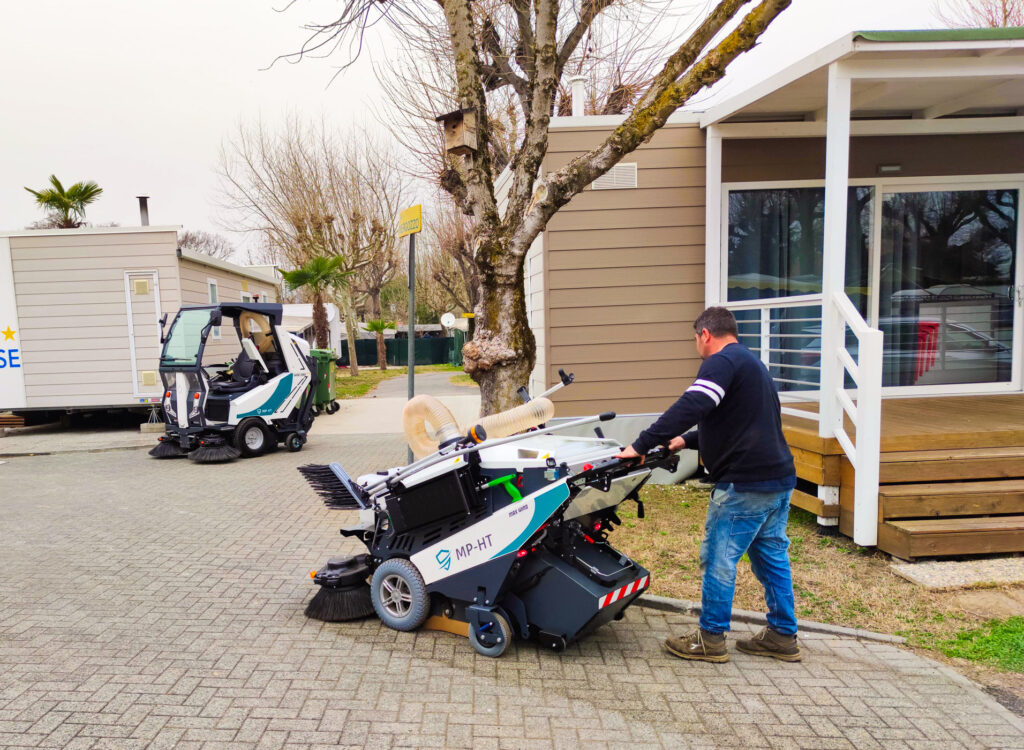
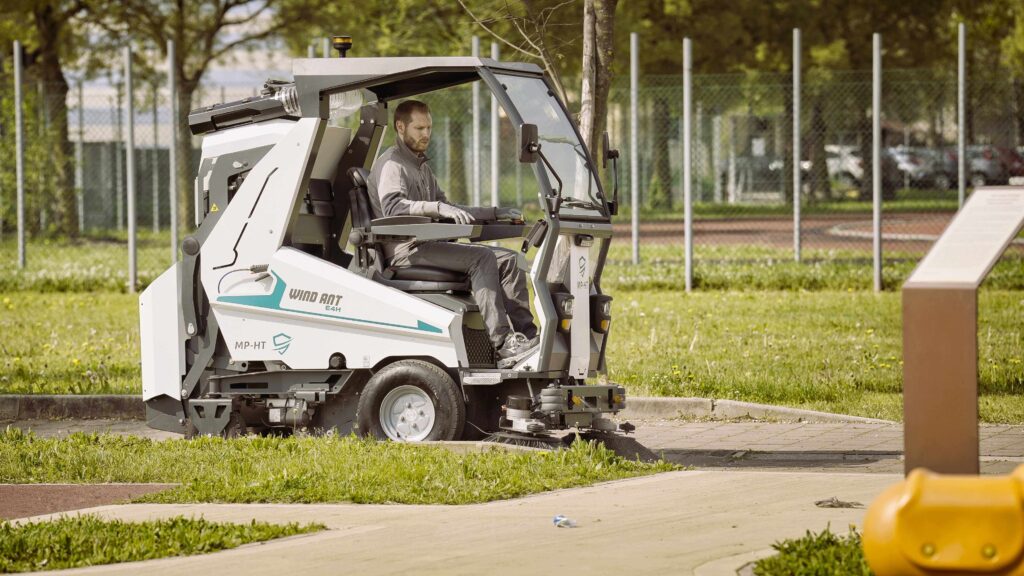
The compact dimensions of MP-HT street sweepers allow for sweeping and sanitizing small and medium-sized environments: historic centers, pedestrian zones, sidewalks, parking lots, parks, sports fields.
The MAX WIND sidewalk sweeper, the perfect combination of functionality and ease of use, guarantees accurate sweeping in spaces difficult to navigate with a bulky street sweeper.
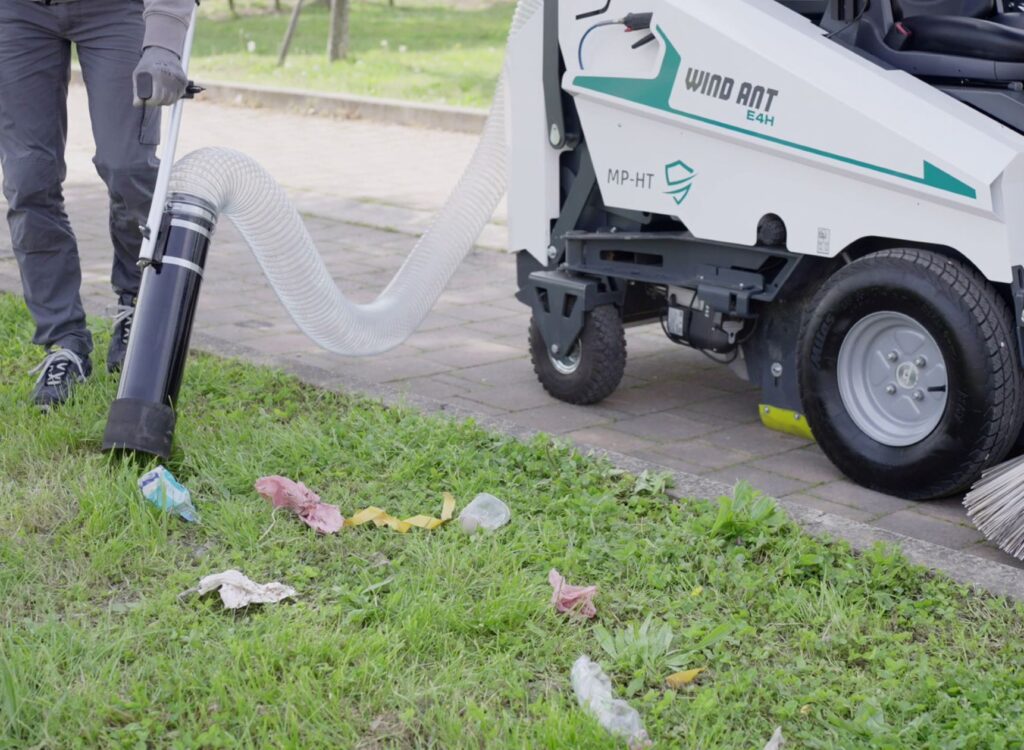
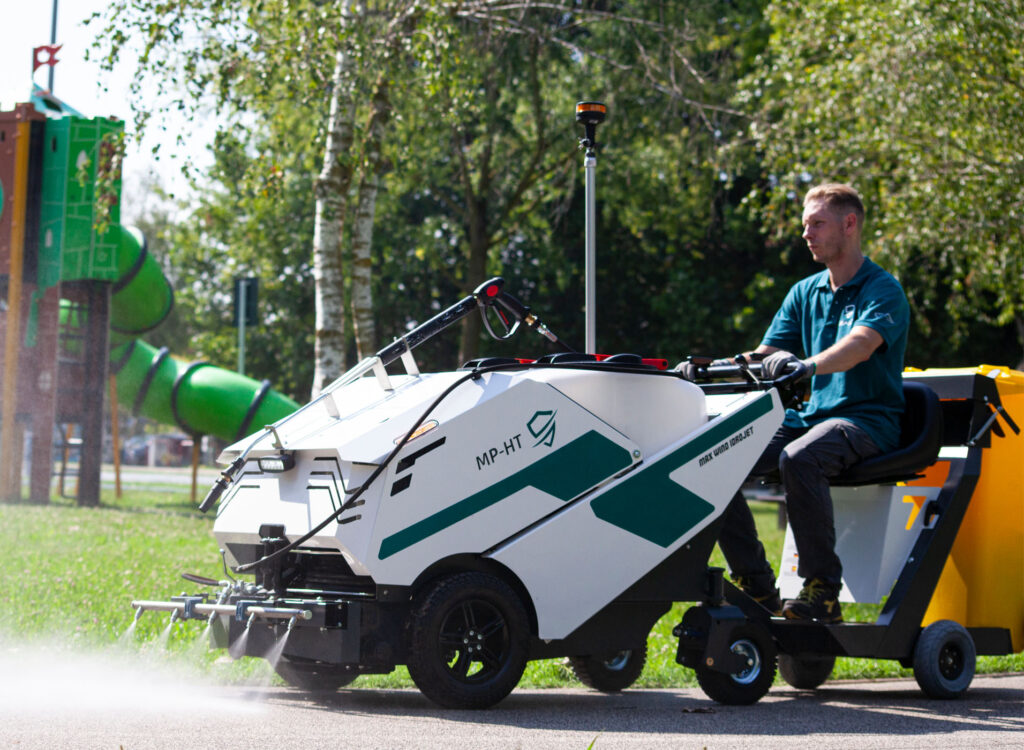
The suction tube and the low-pressure washing lance allow for collecting small debris and sanitizing street furniture while the powerful scraping side brush enables removal of weeds and pigeon droppings along street edges.
Thanks to the comfortable removable trolley, the operator can use the sweeper in a seated position both during work and during transfer.