How do you clean a floor? Regardless of how often you clean floors, to achieve good results you must sweep before washing.
The sweeper is the tool that allows you to remove non-adherent dirt, such as small solid debris and dust, from various types of surfaces—both industrial and civil—in a mechanical, thorough, and rapid manner, preparing the area for the subsequent washing phase.
What is a sweeper machine made of?
Sweepers, whose primary function is sweeping, are used both in the private sector—in manufacturing industries, warehouses, shopping centers, hospitality facilities—and in the urban sector, supporting municipalities and municipal companies in the care and cleaning of squares, streets, sidewalks, and all public spaces.
Acquiring a simple and agile professional sweeper, capable of cleaning quickly and effectively, is the only way to keep an environment consistently clean and healthy, while also avoiding costly damage to production line machinery caused by the accumulation of dust and dirt over time.
Components of a Sweeper Machine
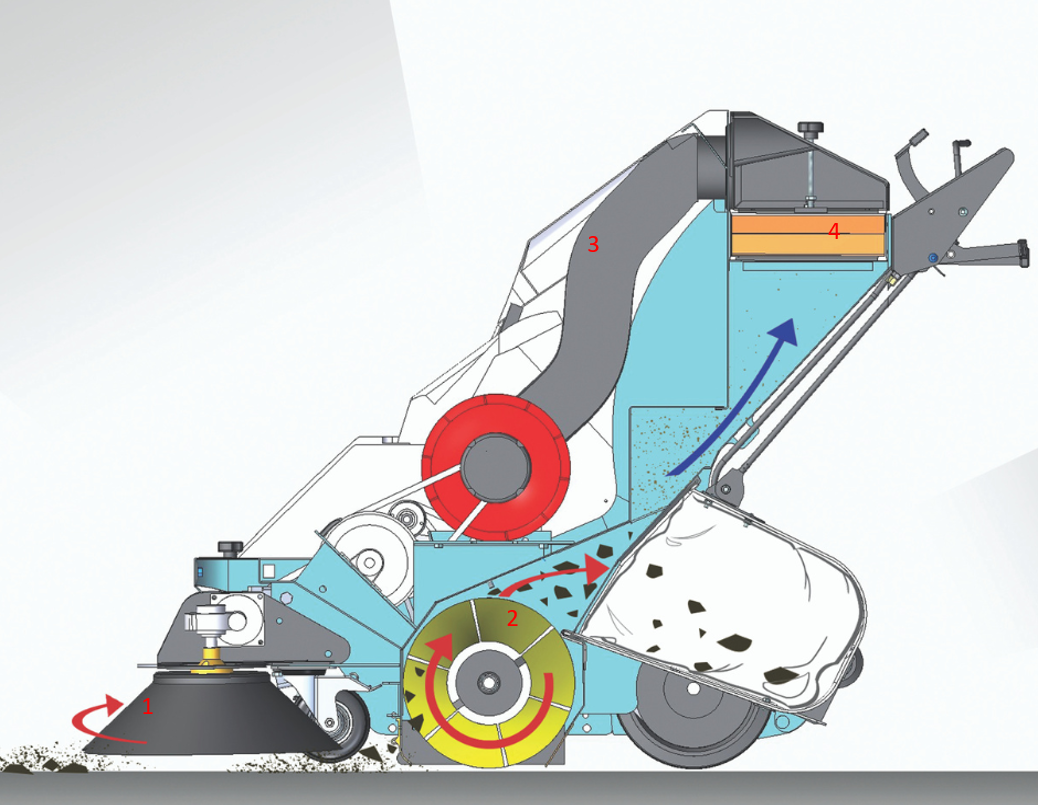
To understand how a sweeper works, it is important to know the main components that make it up, such as:
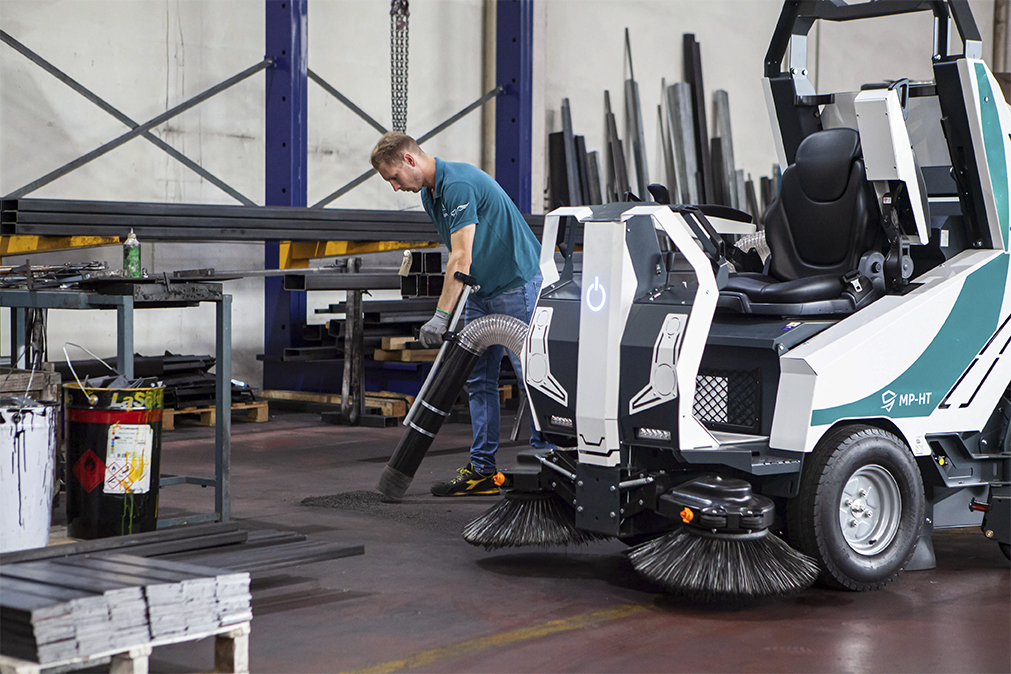
- The brushes. The side brushes, also called “cup” brushes, have the function of conveying dirt toward the center, where the central roller brush moves debris into the collection container. The choice of the right brush varies based on several factors including the type of floor and the type of dirt.
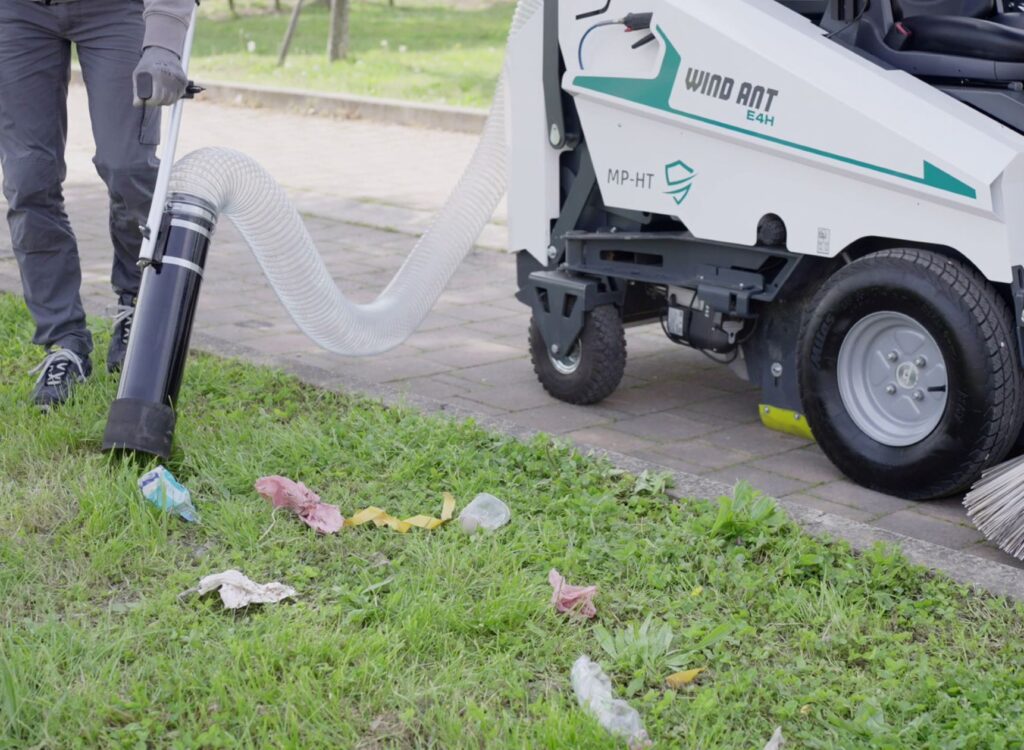
- The suction system. The suction system varies depending on the type of sweeper. In mechanical-vacuum sweepers, as all MP-HT sweepers are, dust is captured thanks to the vacuum created by the suction fan and is retained by the dust filter. This allows working in the complete absence of water, unlike vacuum sweepers.
- The filter. Filters, which can be of different shapes and materials such as paper or synthetic material, have the important function of retaining aspirated dust and preventing its dispersion into the environment. MP-HT, in its sweepers, has chosen to position the filter in a strategic location, away from the waste container. This elevated placement ensures greater retention of fine dust and prolonged efficiency over time.
- The waste container. Of small, medium, or large capacity, all the dirt collected during work ends up in the waste drawer. Its emptying can be done manually, in small to medium-sized walk-behind sweepers, or mechanically at height, in larger ride-on sweepers.
Types of Professional Sweeper Machines
The common purpose of any sweeper is to sweep and collect non-adherent dirt. In the market, these machines differ based on various characteristics, including the type of power supply, the type of operation, and the type of loading. Let’s examine them in detail.
The Type of Power Supply
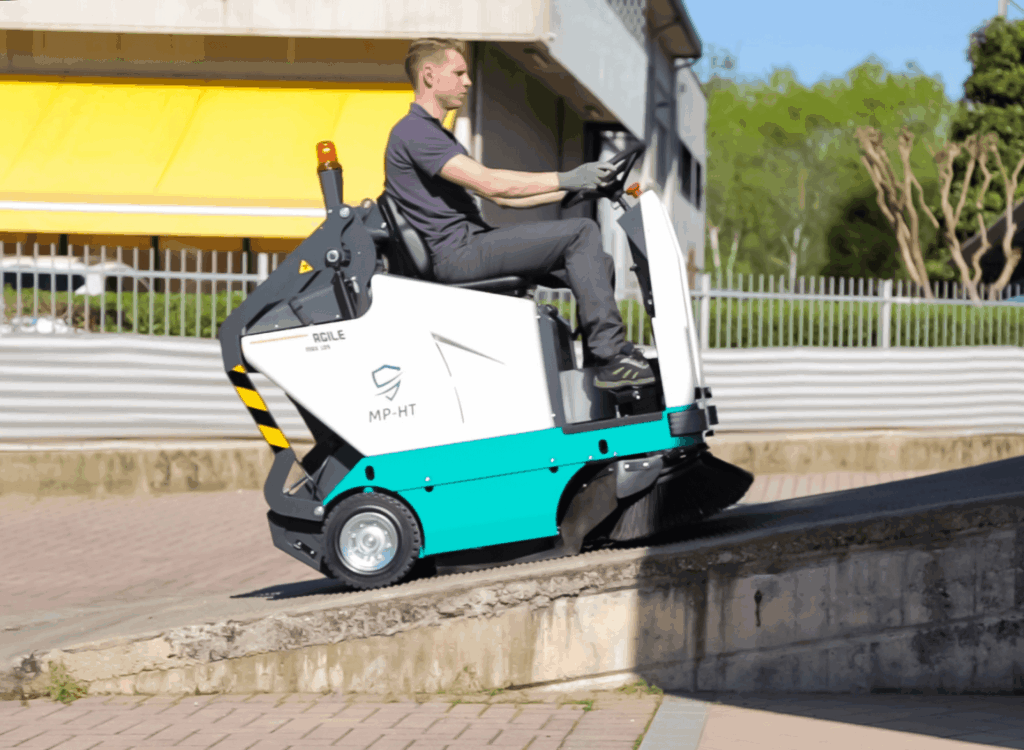
Engine-powered sweepers. Engine-powered sweepers can be powered by combustion engines, gasoline, diesel, or LPG. They are highly efficient machines and are preferred for cleaning outdoor environments. The hybrid version, such as the AGILE MAX 108 and AGILE MAX 109 sweepers, uses technology that combines a gasoline engine with an electric unit connected to a battery pack, ensuring reduced consumption and greater working autonomy.
Battery-powered sweepers. These electric sweepers can install different types of batteries: lead-acid, AGM/gel, or Lithium-Ion. Silent and eco-friendly, they are ideal for cleaning indoor environments, but also in outdoor spaces such as urban centers, ensuring a significant reduction in CO2 emissions.
The Type of Operation
Based on the type of operation, they are distinguished as:
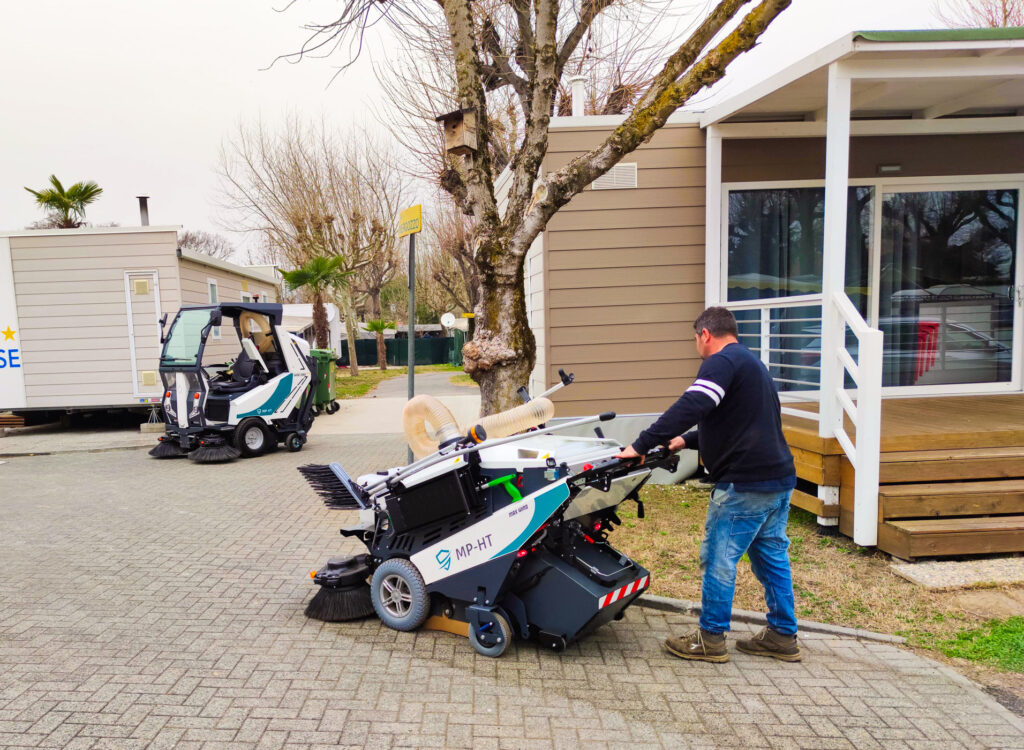
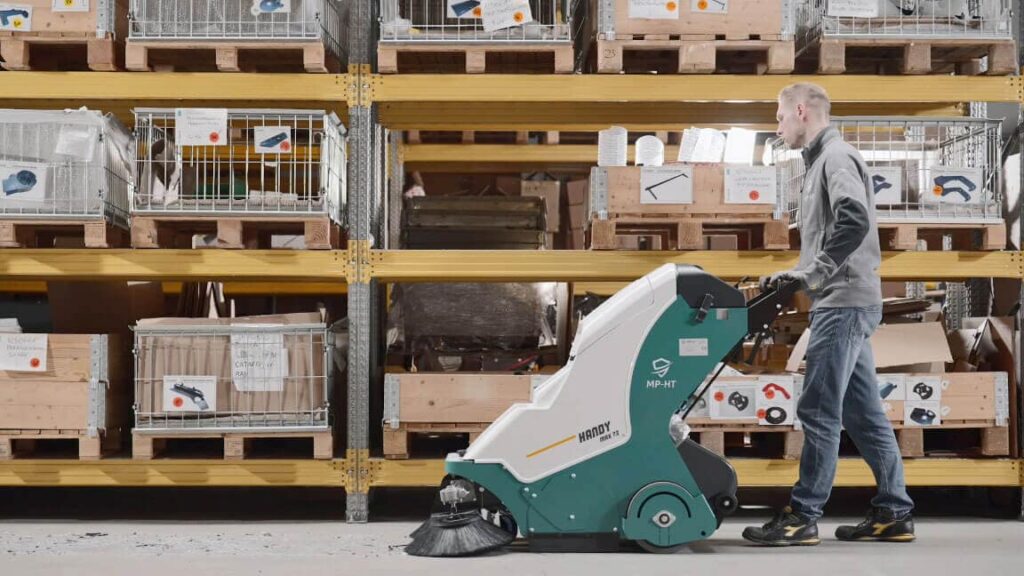
Walk-behind sweepers. Maneuverable and compact, they are designed for daily cleaning of small and medium-sized environments, both indoor and outdoor. Small in size, the advancement is managed directly by the operator, who pushes it forward while walking. All MP-HT sweepers are equipped with mechanical traction, so operation requires no effort from the operator.
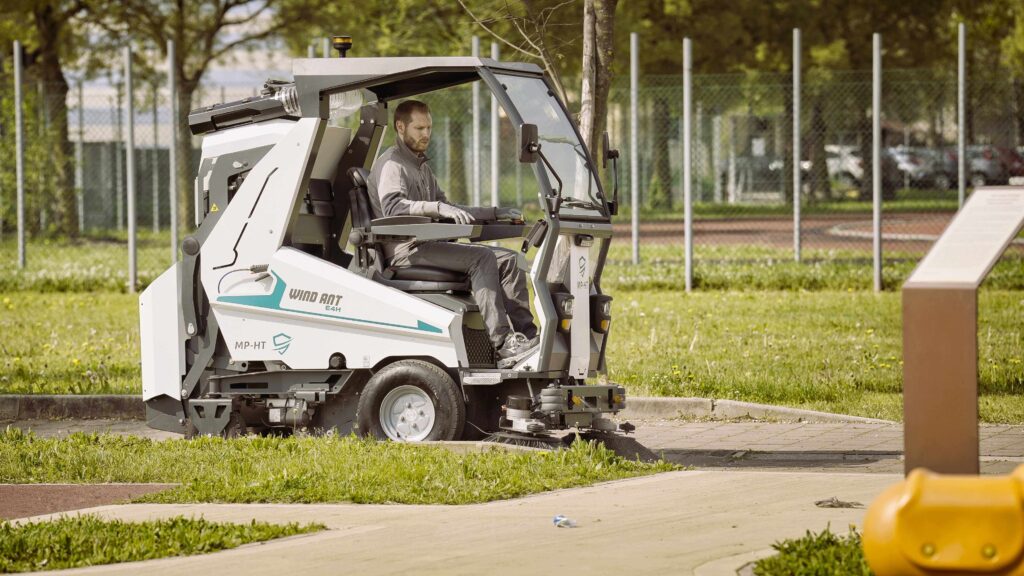
Ride-on sweepers. Suitable for working on medium and large surfaces, such as logistics centers, industries, as well as streets and squares, they are characterized by a wide cleaning path and greater filtration capacity. These machines are equipped with an onboard station and the operator controls them via a steering wheel and controls.
The Type of Loading
In the market there are different types of ride-on sweepers, which are also distinguished by the type of loading:
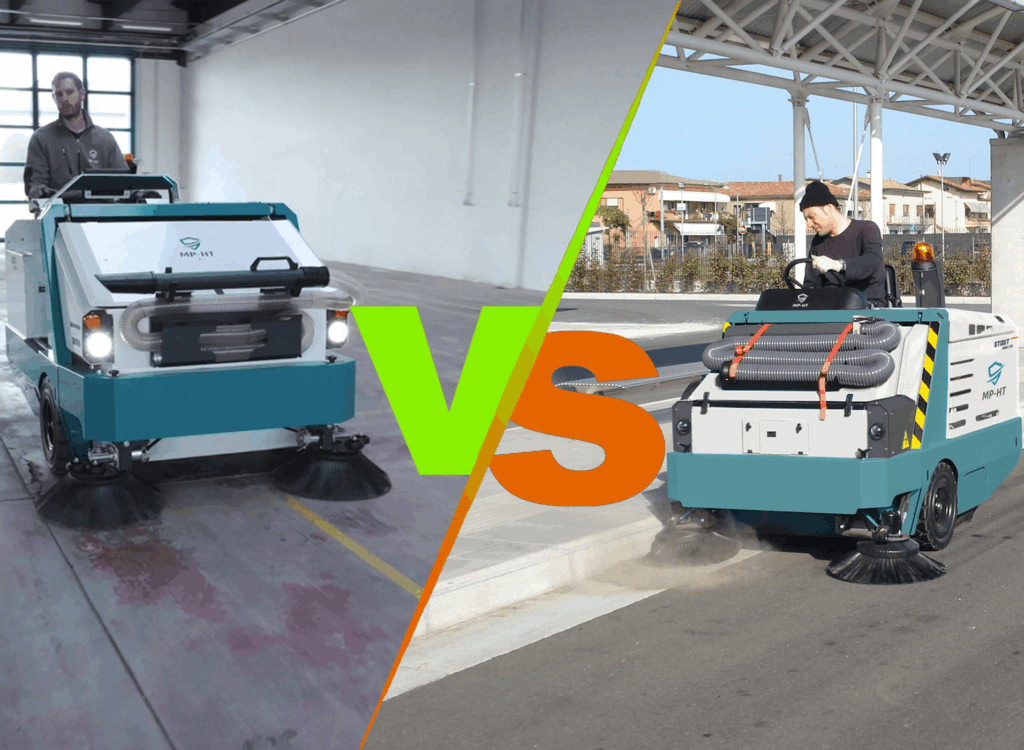
In sweepers with front loading, the central brush moves dirt forward—”broom/dustpan principle”—into the waste container positioned on the front part of the sweeper. These machines, usually large in size, are suitable for collecting heavy dirt in environments typical of heavy industry.
In sweepers with rear loading, the central brush “throws” dirt backward, toward the waste container located on the rear part of the sweeper. These agile and easily maneuverable machines are capable of collecting even bulky light waste, adapting perfectly to the cleaning of commercial areas or light industry spaces.
Operating Standards for Sweeper Machines: How to Use Them and Practical Advice
Whether walk-behind or ride-on, the sweeper does not require specific training and certification to use it, as may be required for other work machines such as forklifts or pallet trucks.
Only if the machine is to operate on the road, the operator, in compliance with the Highway Code, must hold a Class B license and the sweeper itself must be equipped with license plate and registration.
How to Use a Sweeper Machine
Although the sweeper is a simple machine and no licenses are required for its use, there are recommendations to follow to achieve good results and avoid unpleasant accidents to people and/or damage to the machine itself:
- First, it is important that whoever will use the machine reviews the instructions and the use and maintenance manual of the sweeper. This document, required by law, illustrates in detail the hazards, warnings, and general rules for proper use of the machine.
- Before starting work, it is advisable to check the characteristics and condition of the surface, paying attention to any unevenness and the degree of slope inclination. Additionally, it is recommended to pay attention to debris on the floor, ensuring there are no materials that could get tangled in the brushes and thus compromise their proper functioning.
- At the end of each work session, before putting the sweeper away, it is advisable to clean and check the main components of the machine: empty the waste container, clean the dust filter, and check the side and central brushes.
Advice for Choosing Sweeper Machines
Foundries, cement plants, warehouses, shopping centers, parking lots, sidewalks, squares, streets…cleaning is an activity common to multiple spaces, indoor and outdoor, and for each there is a sweeper that is most suitable, capable of efficiently meeting specific cleaning needs.
Factors to Consider When Choosing a Sweeper
- The size of the area to be cleaned: small, medium, large; indoor or outdoor.
- The type of surface: concrete, stoneware, linoleum, asphalt, carpet, etc.
- The presence of obstacles, unevenness, ramps.
- The type of dirt: coarse and heavy dirt, such as metallic materials and dust in workshops and carpentry shops, or fine and light dirt.
Our Advice for Cleaning That Reduces Costs and Improves Work Activity
- Get a compact and agile sweeper, with which you can clean quickly and effectively even in tight spaces.
- Rather than cleaning rarely with extraordinary operations, organize so that cleaning operations become almost daily actions.
- If your workspace is very large, you can divide it into zones and clean one zone at a time. The important thing is that it becomes regular work: this will allow you to use more compact but faster and more agile sweepers.