The removal of weeds from roads and sidewalks is a difficult challenge for municipalities, service providers, and private facility owners. Removing them is important both for aesthetic reasons and in terms of public safety.
Sidewalk Weed Removal: Why It Matters
The term “weeds” refers to all types of unwanted plants that spread in gardens, lawns, but also in squares, on sidewalks, and along streets. These invasive plants are characterized by high resistance, rapid propagation, and the ability to penetrate the substrate, facilitating access to water and consequently causing mechanical damage to structures and surfaces.
Preventing the deterioration caused by this unwanted vegetation has an impact on several aspects:
Aesthetic. Urban decorum represents the beauty of a city space and affects the quality of life of a community. Maintaining and cleaning public spaces in a scheduled and consistent manner ensures living in a clean and orderly city, therefore more beautiful and attractive.
Safety. Invasive weeds in squares, sidewalks, and streets, if not removed, in some cases become dangerous traps for both vehicles and people. In fact, they can compromise normal traffic flow, as well as cause dangerous falls due to slipping or tripping.
Structural. Invasive vegetation penetrates all types of buildings and pavements. This occurs especially during the warmer and more humid months. The roots of these plants enter the smallest cracks and, over time, become a real source of risk for the functionality and safety conditions of roads and infrastructure.
Hygienic. The presence of unwanted weeds near urban centers can promote the proliferation of rats, insects, and parasites dangerous to human health. Additionally, they can contribute to the development of seasonal allergies.
What the Regulations Provide
Since the use of some herbicides represents a potential risk to the quality of water resources and human health, the European Commission, within the Green Deal program, has in recent years put forward a series of proposals to limit and reduce the use of certain chemical substances commonly used to remove spontaneous weeds. The objective is a 50% reduction in the use of plant protection products in the EU by 2030.
In line with this objective, more and more municipal administrations have begun to issue ordinances limiting the use of these products, in favor of alternative green methods, more sustainable for the environment.
This transition toward the use of ecological alternatives focuses on a different approach to the problem, specifically, it encourages the adoption of preventive strategies, regular and continuous maintenance, and finally the experimentation with products less toxic to the environment and the operator.
In Italy, for example, each Region has drawn up its own Regional Action Plan (PAR) imposing restrictive constraints on the use of chemical substances such as glyphosate in all urban areas frequented by the population, both for private individuals and public entities.
Who Is Responsible for Sidewalk Weed Removal?
In Italy, as established in Legislative Decree 285/92 of the Highway Code, the sidewalk is public land and therefore its maintenance falls to whoever owns it, namely the Municipality. This decree, therefore, completely relieves condominium owners from sidewalk cleaning and maintenance.
There is, however, an exception: if the sidewalk is adjacent to condominium buildings that are accessible only from a private road, therefore usable by the building’s condominium owners, the ownership and responsibility for the sidewalk falls to the owners of the entire condominium. This means that the entire condominium is responsible for and owns the sidewalks, so maintenance operations will be the responsibility of the condominium owners, including: repairing potholes and pavement, cleaning snow, leaves, etc., spreading salt in winter.
Eliminating Weeds from Sidewalks: Professional Methods
For a beautiful, clean, and safe city, it is important to recognize the need to remove spontaneous weeds. Nowadays, weeding using plant protection products is being replaced by mechanical methods. These include:
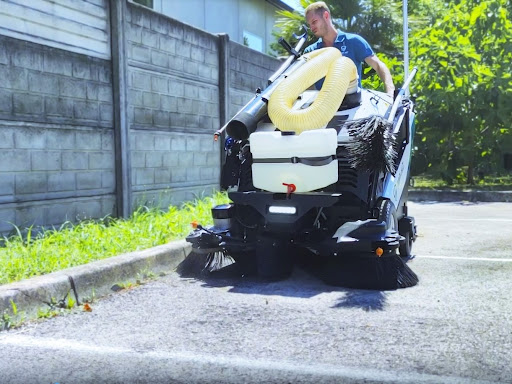
MECHANICAL WEEDING. Scraping brushes, brush cutters, and lawn mowers are a widely used alternative that allows the elimination of unwanted weeds along sidewalk edges, streets, and in city centers. This method, which does not always allow for root removal, requires continuous and consistent scheduling, especially during the warmer months.
FLAME WEEDING. The direct flame weeding technique, also called thermal weeding, uses the heat generated by the flame to “cook” the unwanted weeds and thus cause them to detach from the ground. Elimination is immediate, but this method also does not always guarantee reaching and destroying the roots. Additionally, this treatment is not recommended in dry and arid climatic conditions.
HIGH-PRESSURE WATER WEEDING. This treatment uses professional pressure washers whose very high-pressure jet is capable of eliminating weeds and destroying the roots by penetrating into the cracks of infrastructure. A limitation of these machines concerns the limited working width they can cover.
STEAM WEEDING. Through the use of a special machine equipped with a boiler, this method uses the generated steam to produce a thermal shock to the invasive plant. The steam “cooks” the plant, which dries out and will no longer have the strength to regrow. The limitation of this treatment is the high costs related to the fuel and water consumption used by the machine.
MAX WIND: The MP-HT Solution for Sidewalk Weed Removal
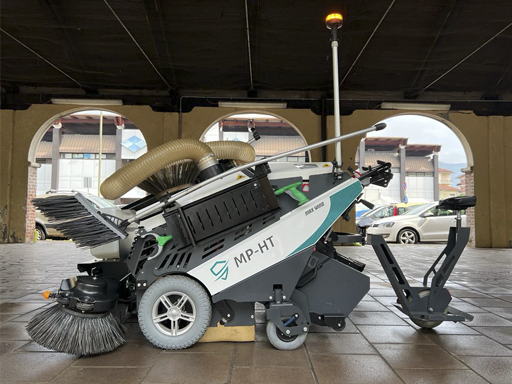
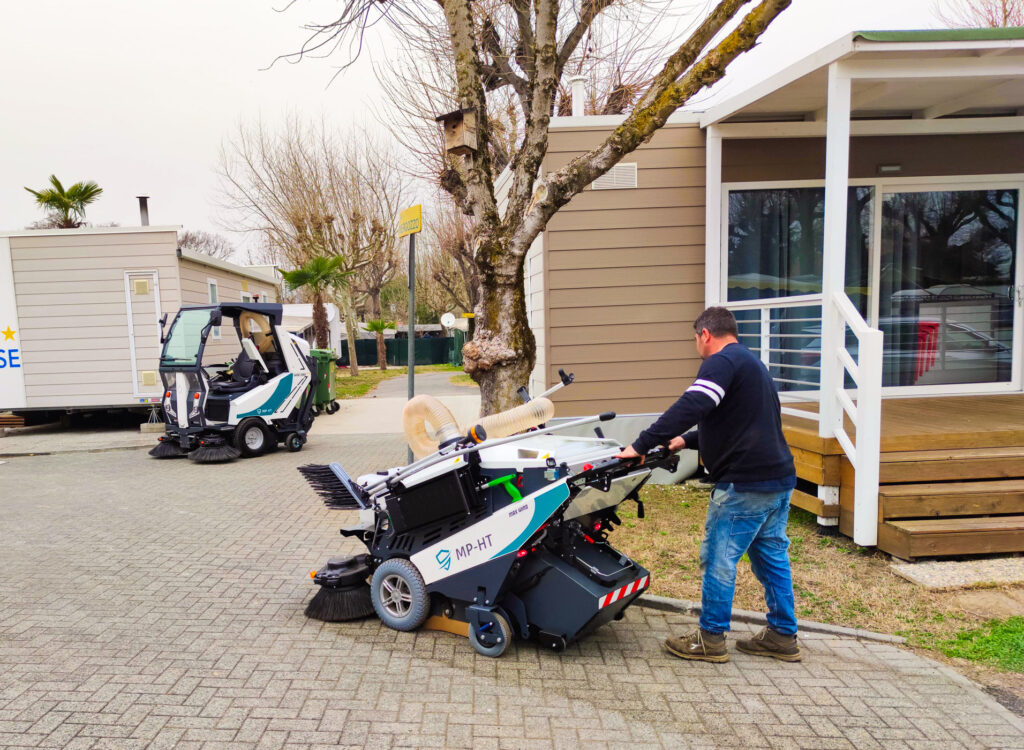
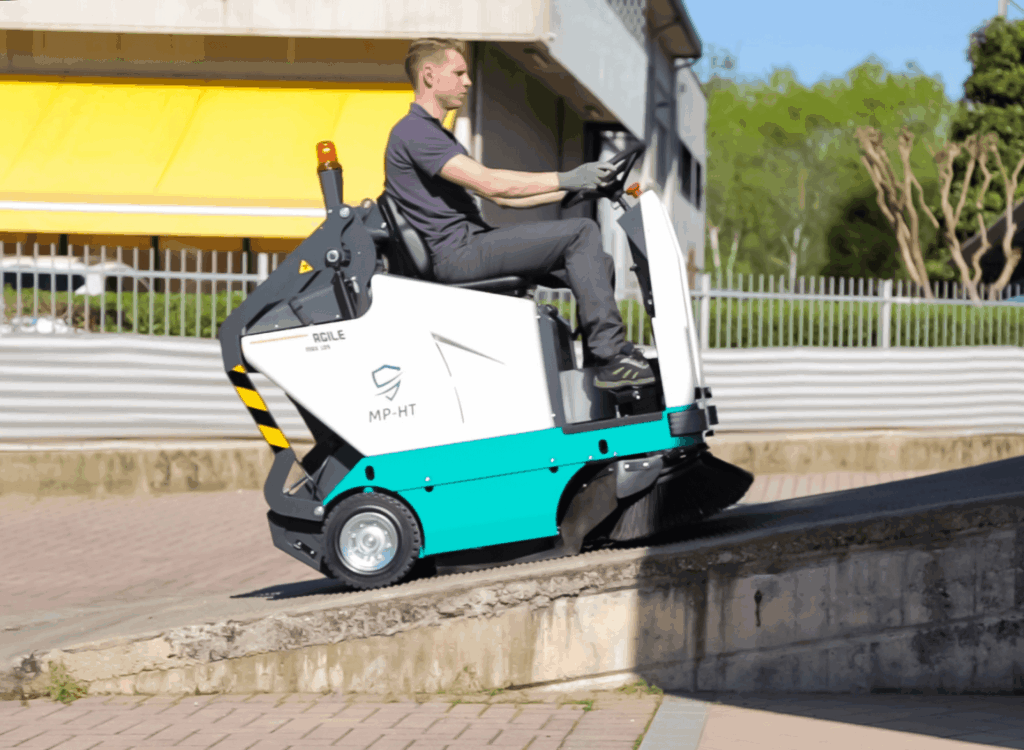
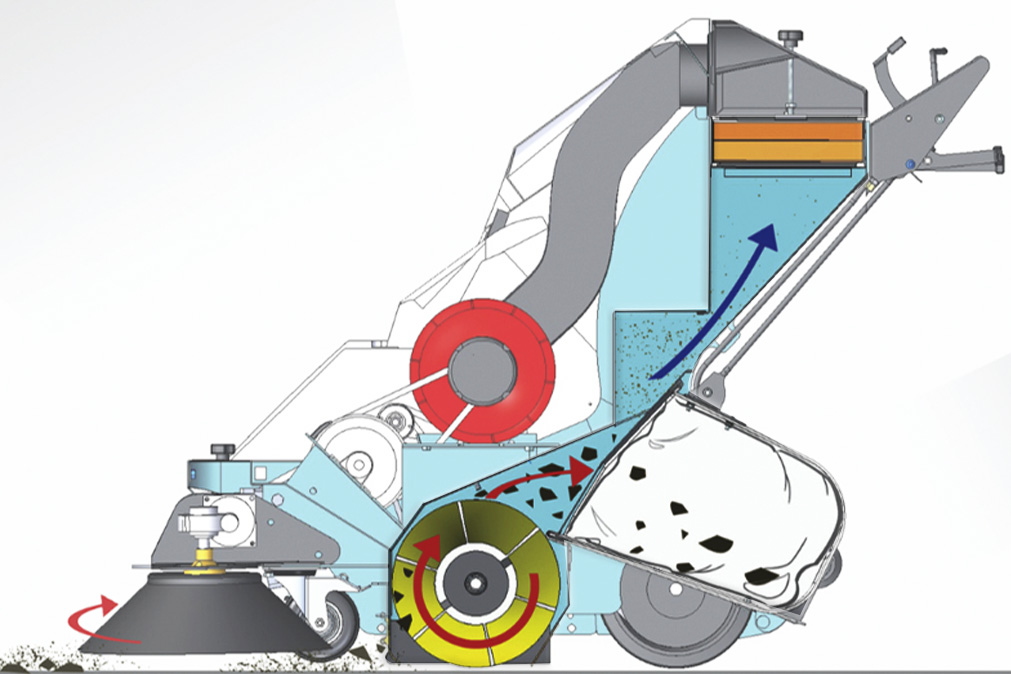
A compact and fully electric machine, designed to enable frequent, rapid, and thorough cleaning of streets and pedestrian areas. With a sweeping width of 125 cm (with the two side brushes), in addition to ensuring professional mechanical sweeping even in the narrowest alleys, Max Wind effectively removes both bird droppings and weeds along the edges of sidewalks and buildings. This is thanks to the installation of a special side scraping brush.
The scraping brush installed on the Max Wind sweeper is a professional and ecological alternative for the mechanical removal of invasive weeds along sidewalk edges and in historic center pavements.
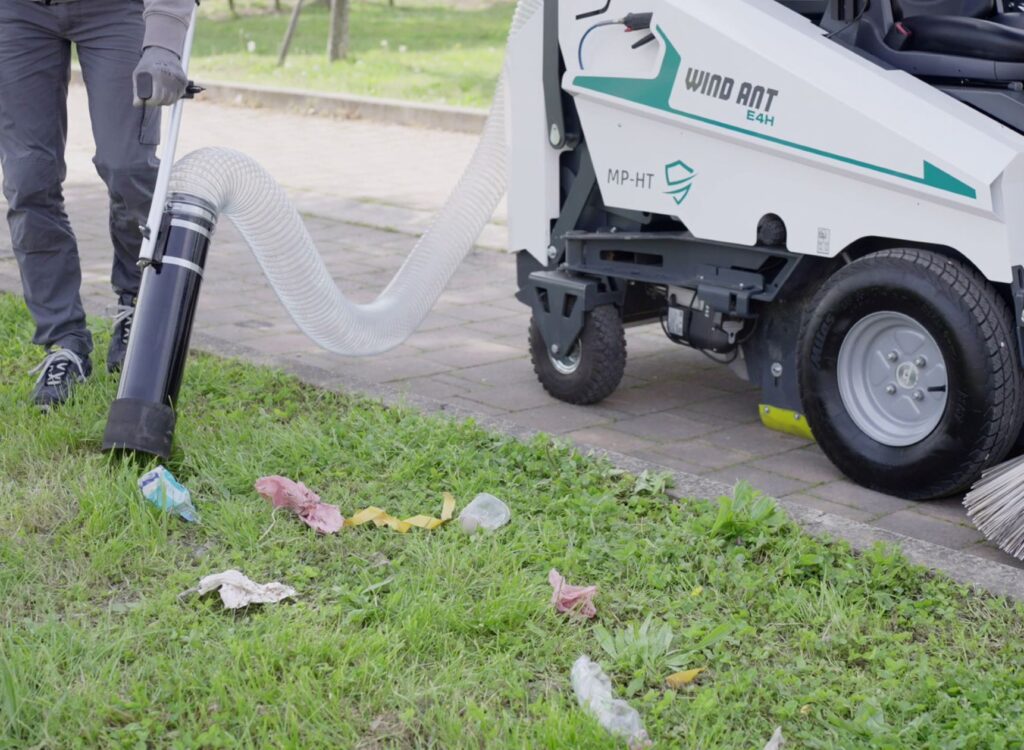
Since the sweeper is equipped with a suction system, in addition to uprooting the weeds, it simultaneously collects them directly from the ground, leaving the pavement clean.
In this regard, it is worth considering that on a clean surface, it is less likely that invasive plant seeds will settle and therefore develop.
The Max Wind street sweeper is a versatile work tool, designed to support manual sweeping activities and enable municipalities to ensure daily and continuous cleaning in a simple and effective manner.