The cleaning of work environments is a delicate matter that concerns any business, in any sector. Keeping a clean environment does not only serve to give a good impression in terms of corporate image, but has tangible effects on the quality of life and work.
Types of industrial flooring
Taking care of industrial floor maintenance and keeping corridors and surfaces clean and clear is important both to guarantee productivity and for safety. Today, for example, logistics centers, distribution centers, and warehouses are increasingly large and crowded facilities, operating 24/7, where the presence of waste, whether solid or liquid, represents a risk factor for people and operations.
To choose the cleaning machinery suitable for correct cleaning and maintenance of industrial floors, it is advisable to evaluate and consider several factors.
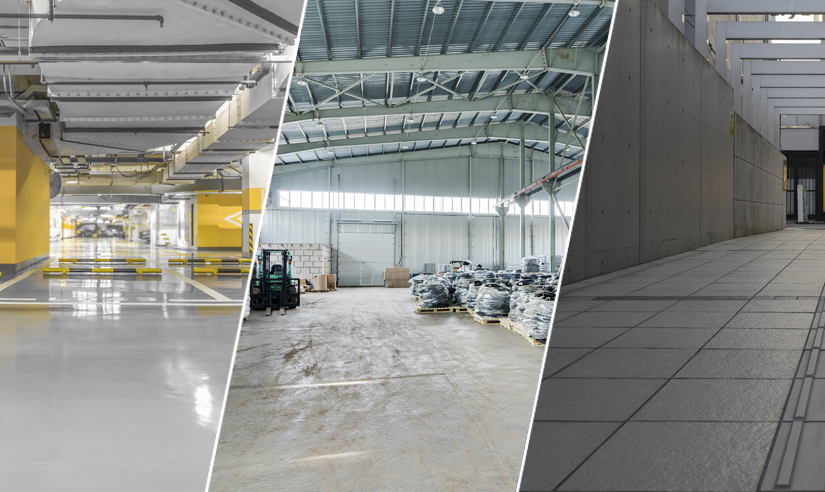
Firstly, the type of material of the surface to be treated must be examined. In industry, floors can be:
- RESIN. Increasingly widespread and appreciated, resin floors are characterized by being very resistant, linear—meaning free of joints and seams—and highly hygienic. Furthermore, the wide variety offered by the market allows for high levels of customization and decoration.
- CONCRETE. Durable and resistant, concrete is a simple and economical material, suitable for multiple environments. Thanks to innovative laying techniques and finishes, these floors can now also be aesthetically pleasing. Unlike resin, concrete is a permeable material that absorbs oils and all liquids in general. It is therefore important to pay particular attention to the choice of chemical product used for cleaning to avoid the formation of unsightly stains.
- PVC. PVC vinyl flooring is increasingly used in the industrial world. These modular floors can be laid without the use of adhesive and are designed to withstand heavy loads, endure impacts, and be resistant to liquid penetration.
The most common problems with industrial floors
Once the material of the industrial floor has been established, it is important to consider possible issues and the type of dirt:
1 Oil and fuel stains. Especially in manufacturing companies, the use of machinery that employs fuel and oils can cause spills on the floor. These substances can cause dangerous slips and therefore workplace injuries. Furthermore, if not promptly removed, they damage the protective layer of the floor itself over time.
2 Shavings and strapping. In any warehouse or company, filling shavings and plastic or metal strapping are used for packaging. If accumulated, this material can also cause dangerous slips and, by getting caught, damage machinery for moving goods and the production line.
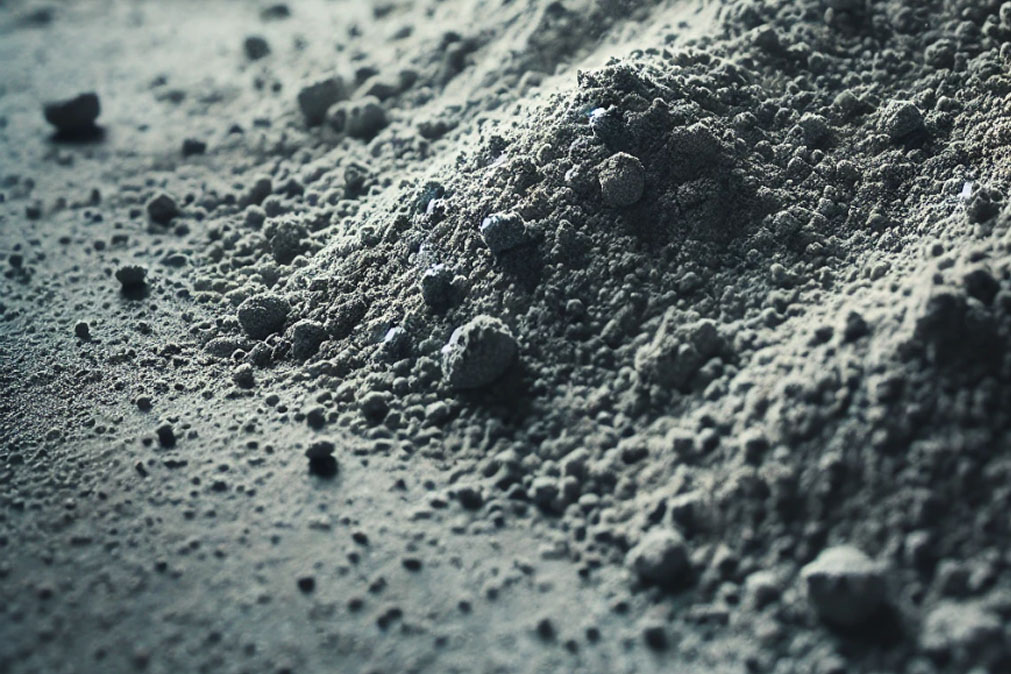
3 Dust. Residual dust from processing, even if fine and difficult to see, can ruin expensive industrial production line machinery if it accumulates. Furthermore, combined with environmental dust from outside, it is a danger to workers and people who inhale it.
Even though cleaning is an often underestimated aspect that seems like it can be postponed, addressing cleaning operations promptly and on a daily basis guarantees a safe and more efficient environment at a productive level.
To save time and money and for effective results, cleaning must stop being an extraordinary task and become an ordinary job, easy and fast to perform.
For this reason, it is very important to clean consistently, several times during the week. By doing so, there will never be large amounts of dirt to sweep and smaller, more agile sweepers can be used to carry out ordinary cleaning work in a short time.
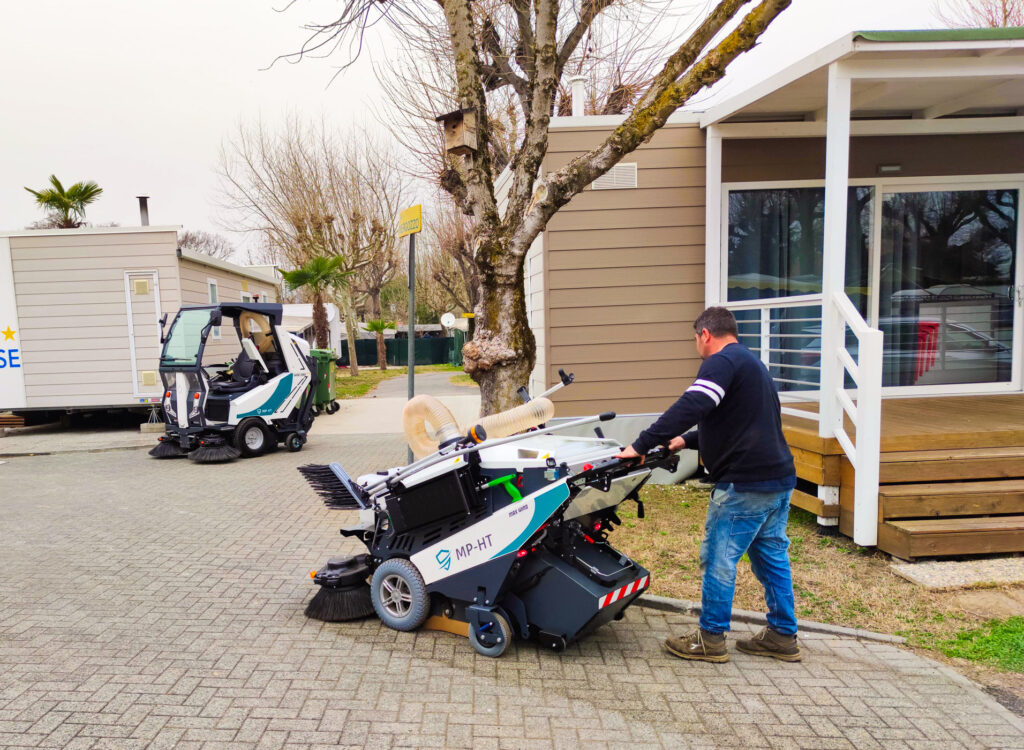
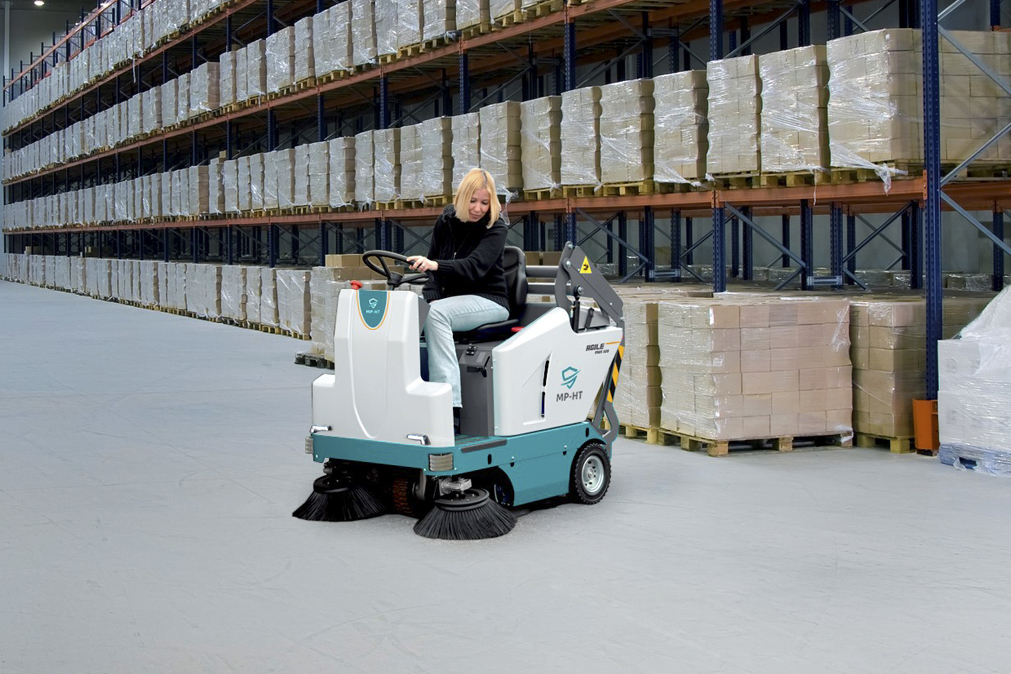
Small sweepers are easy to use and manage even by non-specialized personnel, and do not require special licenses.
Anyone can use them and help keep the environment clean. They have a higher working speed than large sweepers and require very little maintenance.
The advantages of using professional sweepers for industrial floor cleaning
Professional sweepers are indispensable tools for removing non-adherent dirt from floors, preparing the area for the subsequent washing phase.
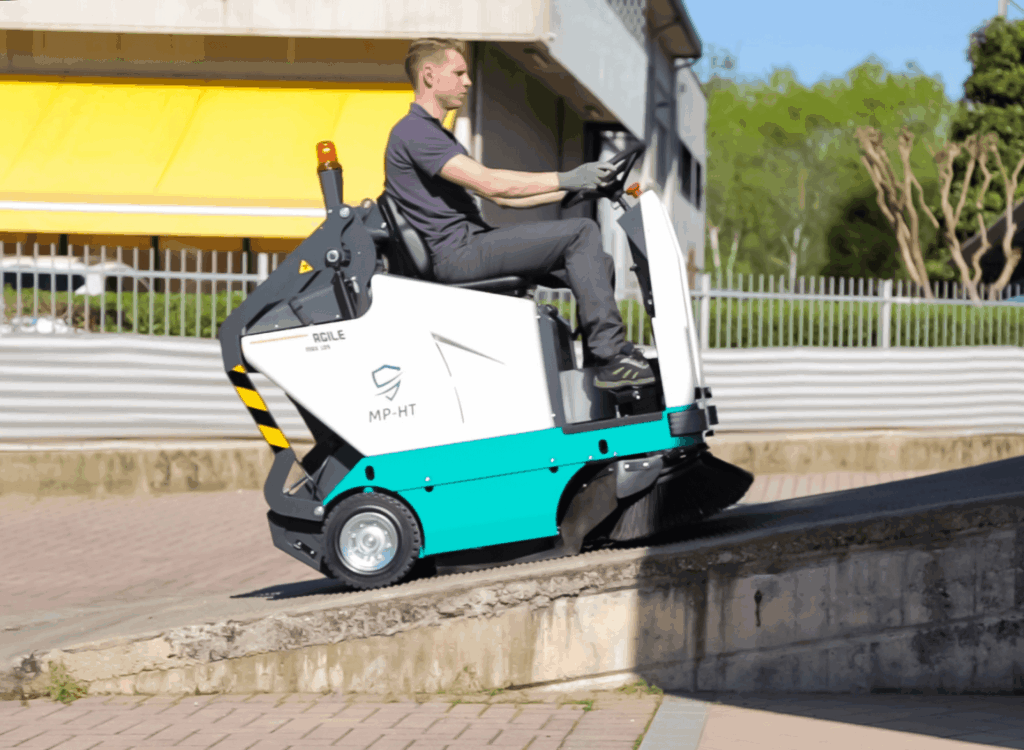
A compact and agile sweeper allows for the easy and effective removal of debris and dust from floors, ensuring an orderly and clean workspace.
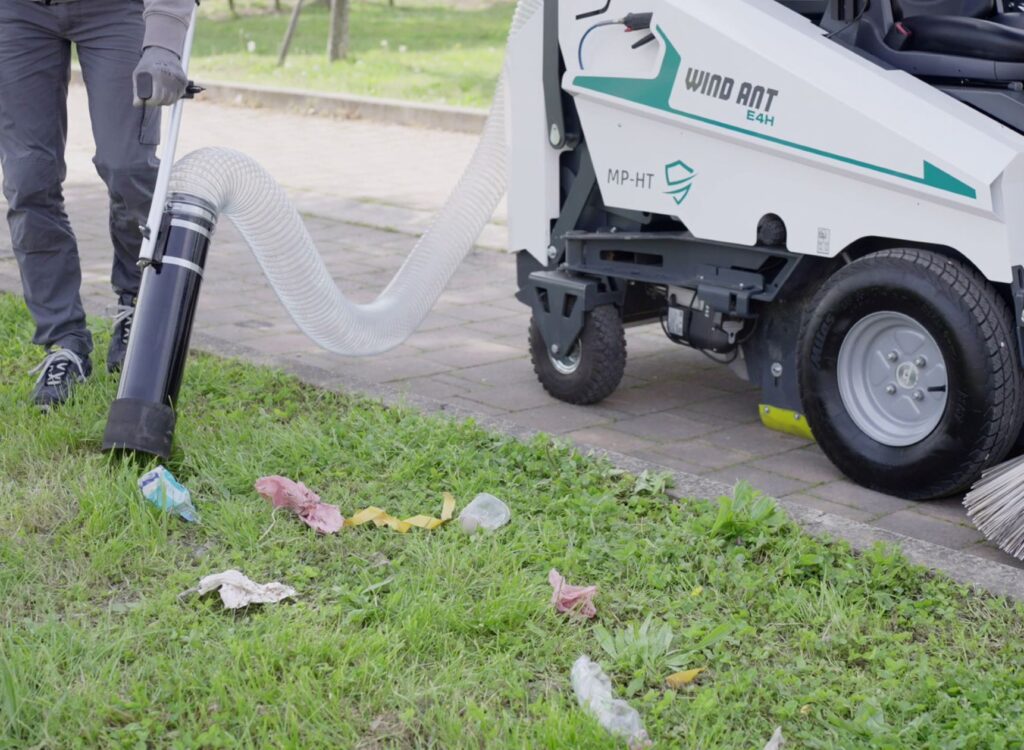
Furthermore, thanks to accessories such as the auxiliary suction hose, these machines allow for the capture of dust both in the narrowest corners, where the sweeper cannot pass, and on shelving.
MP-HT sweepers for professional cleaning
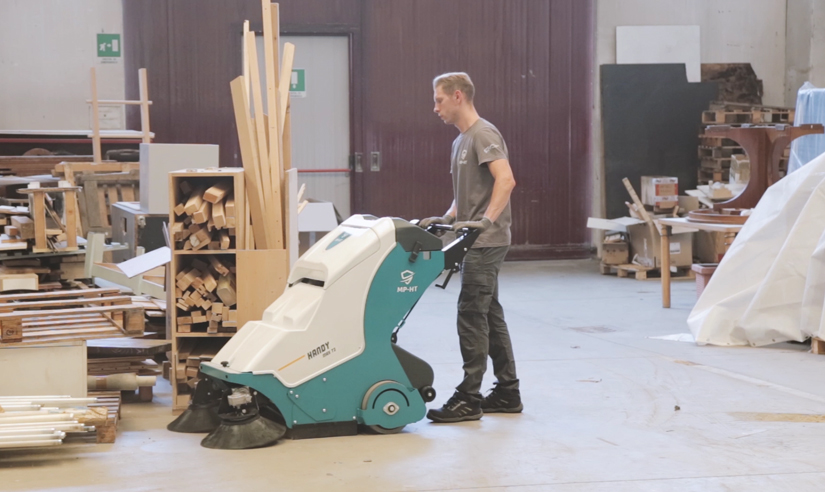
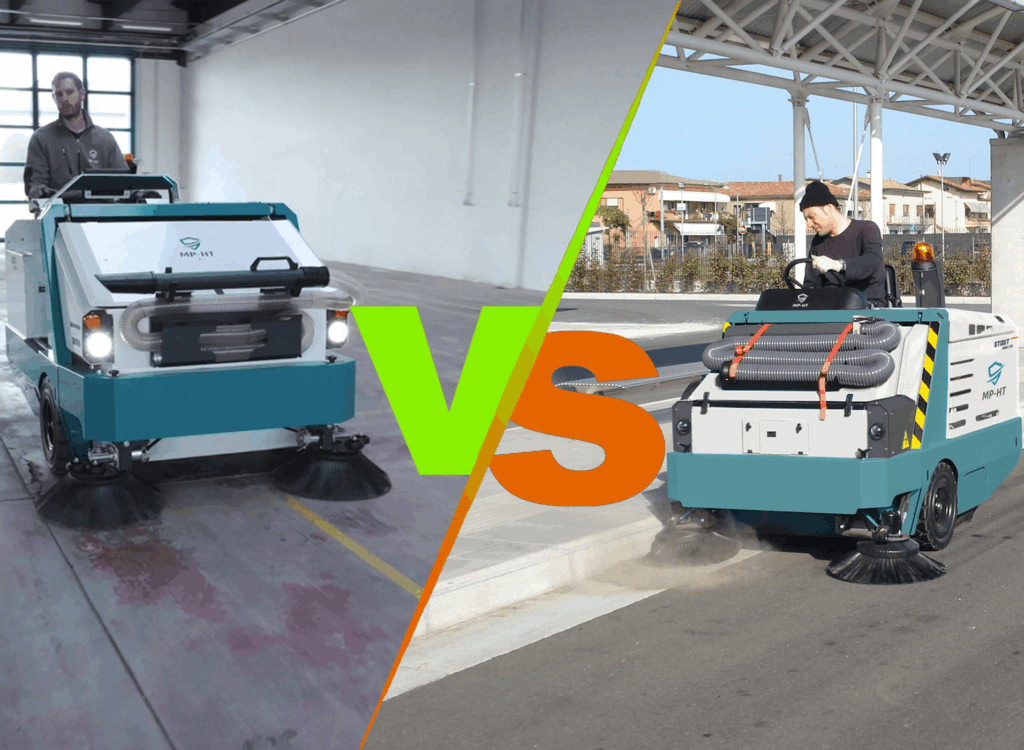
We have been producing industrial sweepers for over thirty years, and in our long experience, we have understood the importance of adopting a cleaning method that allows for concrete results, resource savings, and improved efficiency of production lines. For this very reason, our sweepers are tools capable of turning cleaning from an obstacle to be overcome (which hinders work) into a practice capable of adding value to your work, helping to save time and money.
We design all our sweepers by focusing on features that make work easy and fast:
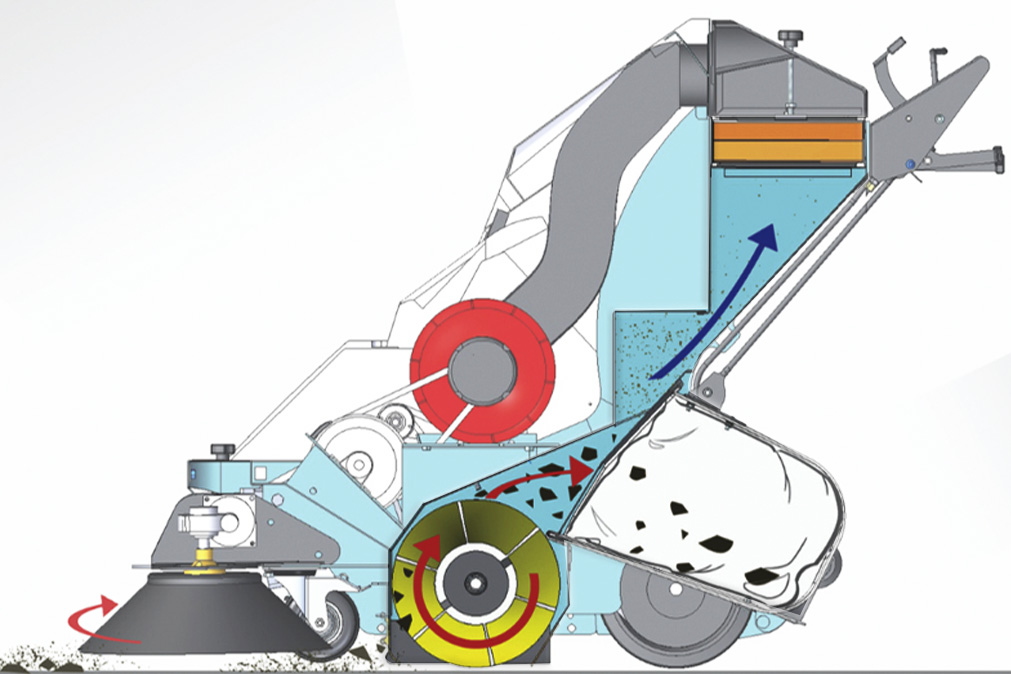
- AGILITY AND EFFICIENCY: a powerful suction system on agile, fast, and powerful machines. Featuring systems for safeguarding operator health, such as dirt collection in bags.
- EASE AND ERGONOMICS: intuitive controls that facilitate work and do not require special licenses or permits. They are simple to use even for non-specialized operators.
- NEAR-ZERO AND RAPID MAINTENANCE: easy to perform on-site, without the need to take the sweeper to a workshop.
Discover all the advantages of MP-HT sweepers and how they will help you transform the cleaning task from a costly nuisance into added value for your company.