Choosing the ideal professional sweeper depends on five key factors: the surface to be cleaned, the type of dirt, whether the environment is indoor or outdoor, the number of daily operating hours, and the operator. Properly evaluating these factors allows you to identify the right model, ensuring efficiency, cost savings, and maximum operational performance.
The Five Criteria That Determine the Choice
Every industrial or public setting presents specific challenges that require a customized configuration. Here are the five key questions to answer before making a purchase.
1. How much area do you need to clean, and how long will it take?
From the porosity of industrial concrete to porcelain tile, outdoor asphalt, linoleum, or carpet: every type of flooring requires a dedicated sweeping system to prevent damage to the surface and ensure optimal cleaning.
For this reason, it’s important to choose the right type of brush, selecting from polypropylene bristles, mixed polypropylene and steel options for the most stubborn dirt, or natural fibers for the most delicate surfaces.
To determine which sweeper to choose, a key parameter to evaluate is the hourly output (or productivity), expressed in square meters per hour (m²/h). Hourly output is calculated by multiplying the cleaning path (the total sweeping width achieved with the side brushes) by the machine’s operating speed. This value indicates the theoretical coverage that can be achieved in one hour of continuous sweeping.
The formula for calculating hourly output:
Hourly Output (m²/h) = Cleaning Path (m) × Speed (km/h) × 1,000
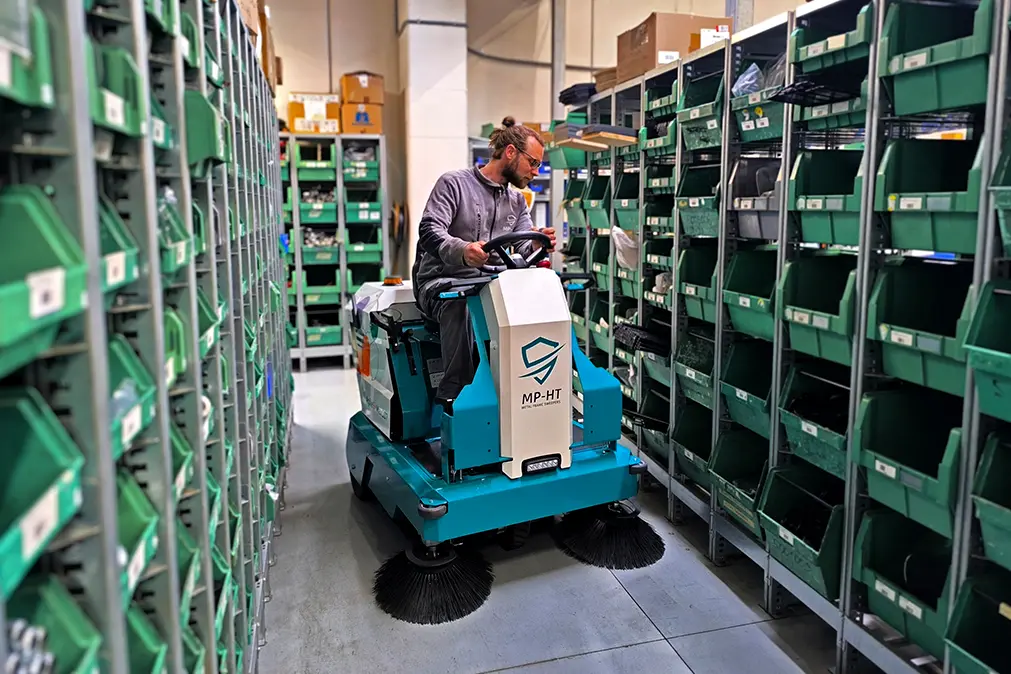
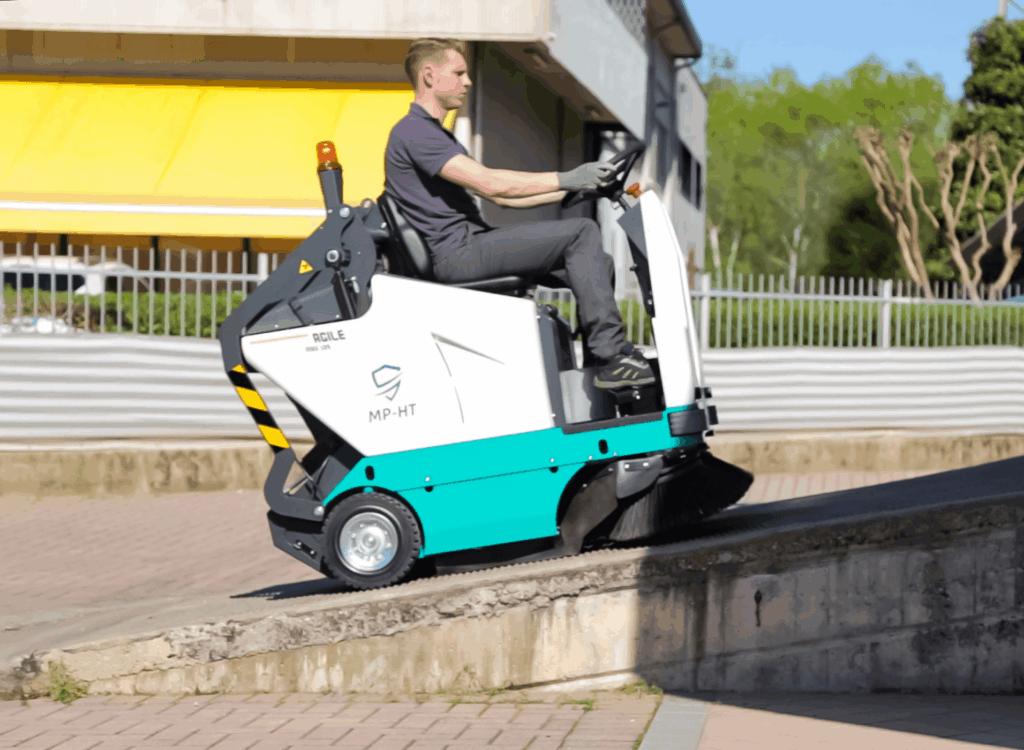
For a practical example, let’s take the AGILE E+ MAX 107, a ride-on with a rear-mounted load, designed to ensure maximum maneuverability in environments with shelving and obstacles, such as in logistics facilities.
- Cleaning width: 1.2 m with 2 side brushes.
- Average operating speed: 7.5 km/h.
Hourly coverage = 1.2 m × 7.5 km/h × 1,000 = 9,000 (m²/h)
This sweeper is therefore capable of covering up to 9,000 (m²/h) in one hour of operation, combining high cleaning performance with the ability to maneuver easily through the narrowest aisles.

To help you choose the most suitable sweeper, the following table compares the size of the area to be cleaned with the type of machine and the working width:
2. What kind of dirt do you need to collect?
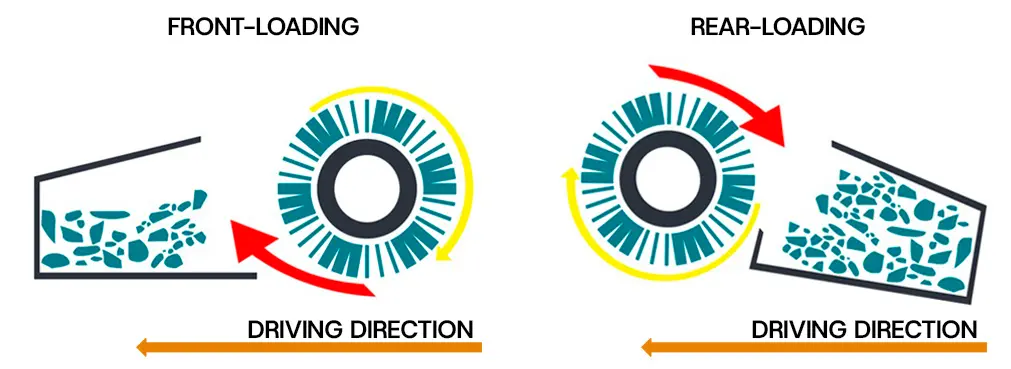
The choice of machine varies significantly depending on the weight, texture, and density of the debris: collecting coarse, heavy debris such as metal shavings, woodworking scraps, or construction debris requires different considerations than fine, light dust. This factor determines the capacity of the waste bin, the type of filter to be installed (paper for light debris or polyester for heavy-duty, moisture-resistant applications), and the loading system, which can be front-loading (ideal for heavy materials) or rear-loading (best for lighter debris).
When dealing with fine dust (cement, plaster, sanding), front-loading machines are ideal: they operate on the“broom and dustpan” principle, pushing the dust forward without lifting it into the container. The filtration system is crucial: the filter must be positioned away from the waste drawer, be easy to clean, and be equipped with an electric filter shaker to return clean air to the environment.
To collect coarse debris such as packaging waste, metal shavings, wood, or construction site debris, a large-capacity bin is needed, and a flap-lift system comes in handy: by lifting the front seal, the sweeper can also pick up bulky debris instead of pushing it forward.
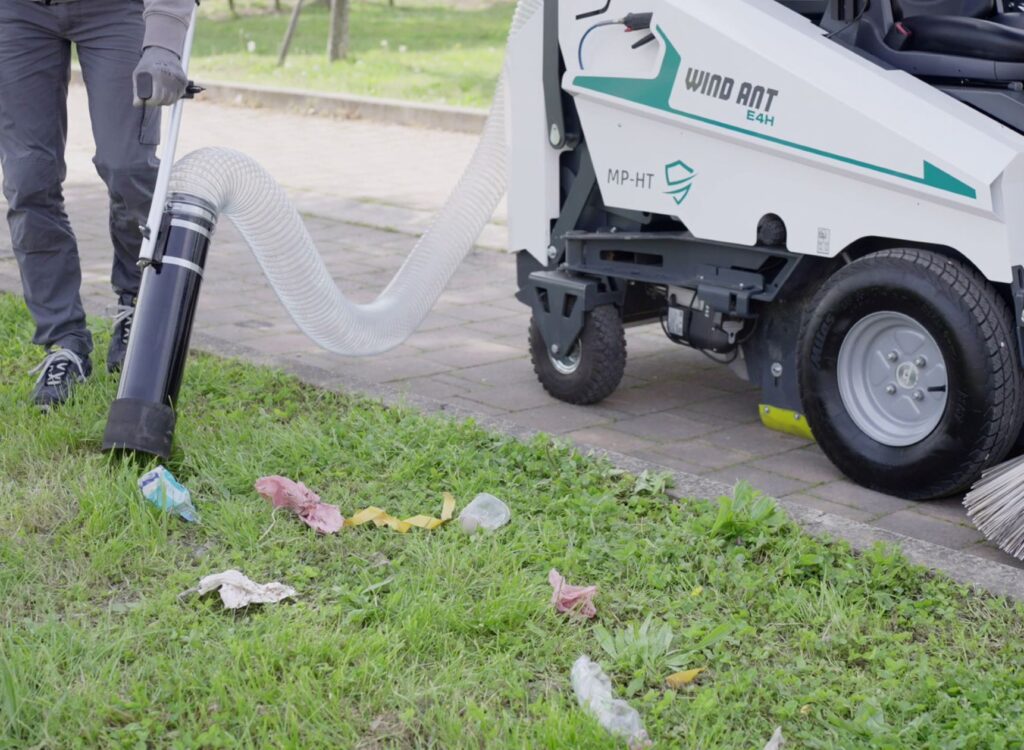
In outdoor yards, the debris is mixed and often damp. A mechanical vacuum system capable of collecting both heavy material and fine dust is required.

3. Indoor, outdoor, or both
Whether it’s an indoor space or an outdoor yard, the work environment significantly influences the choice of sweeper, imposing specific constraints related to emissions, noise levels, dust control, and uneven ground.
Indoors, amid production lines, machinery, and narrow aisles, compact, highly maneuverable machines with a small turning radius are needed, along with battery-powered electric motors to eliminate polluting emissions.
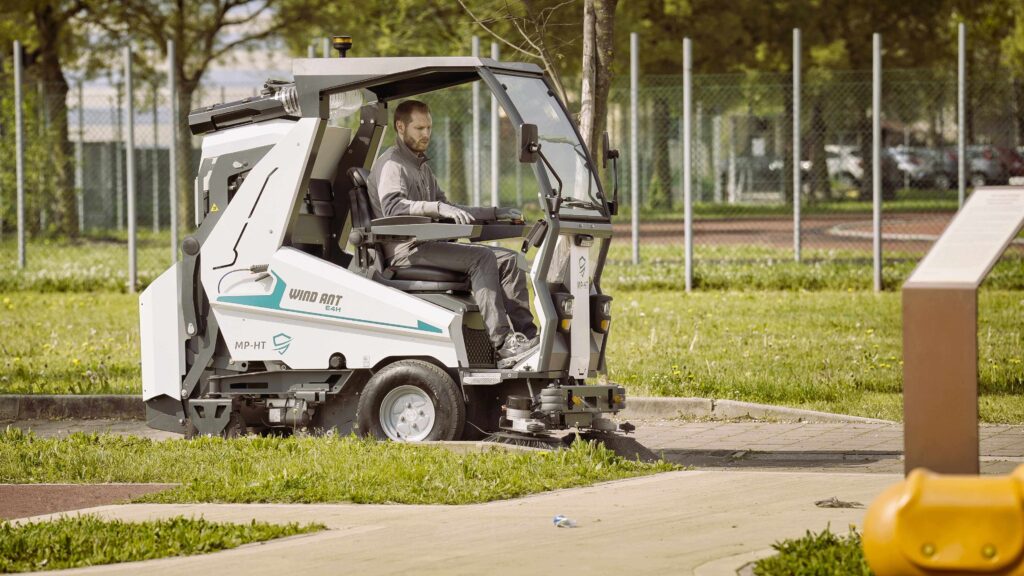
Outdoors, where battery-powered models are also ideal for reducing noise in urban areas, the presence of dips and uneven surfaces requires machines equipped with an effective suspension system to protect the mechanical components and ensure operator comfort.
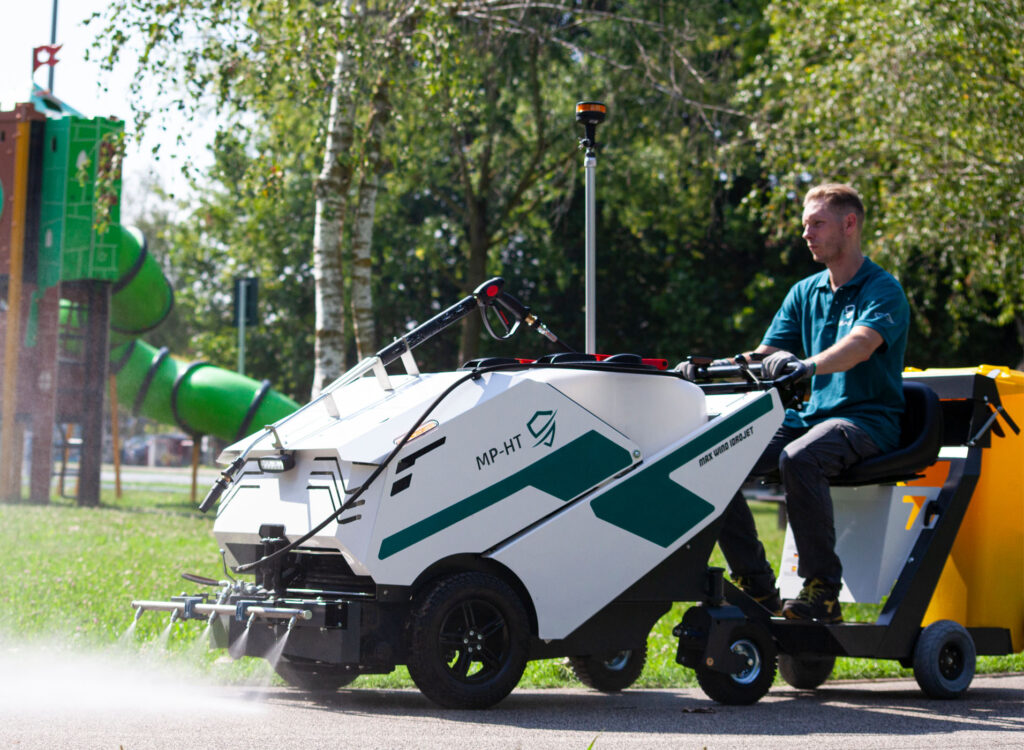
In outdoor areas, it is also necessary to include a water-misting system on the side brushes to control the dust kicked up by their natural rotation. For MP-HT, dust management is a key priority: for this reason, this system is an optional feature always available on all models in the catalog, starting with the most compact ride-on model Handy E+ Cross with a 50 cm brush.
In addition to this feature, there is the innovative placement of the dust filter. In the MP-HT sweepers , the filter is always raised, positioned high up, and well spaced from the waste bin. This prevents direct contact withthe moisture typical of outdoor surfaces and ensures that only fine dust reaches the filter, keeping it efficient for longer, maintaining consistent suction performance, and ensuring optimal recirculationof clean air into the environment.
4. Man on board or man on shore
Choosing between a street sweeper walk-behind or ride-on depends primarily on the size of the area to be cleaned, the layout of the spaces, andthe intensity of the work shifts.
Daily working hours are, in fact, directly linkedto the size of the area and the level of cleanliness required by the production cycle: in many industrial settings, to prevent dust buildup from damaging production lines, it is necessary to clean continuously or across multiple shifts.
This parameter is essential for determiningthe required operating range and hourly coverage (m²/h), guiding the selection of both the machine type andthe most suitablepower source (battery-powered or internal combustion).
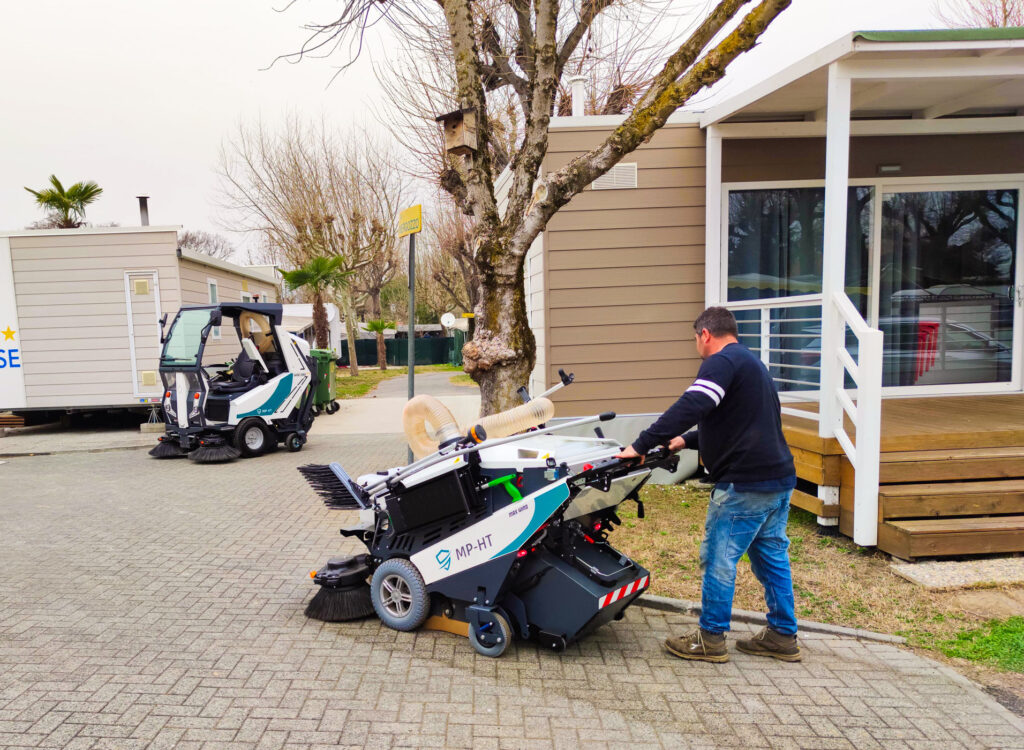
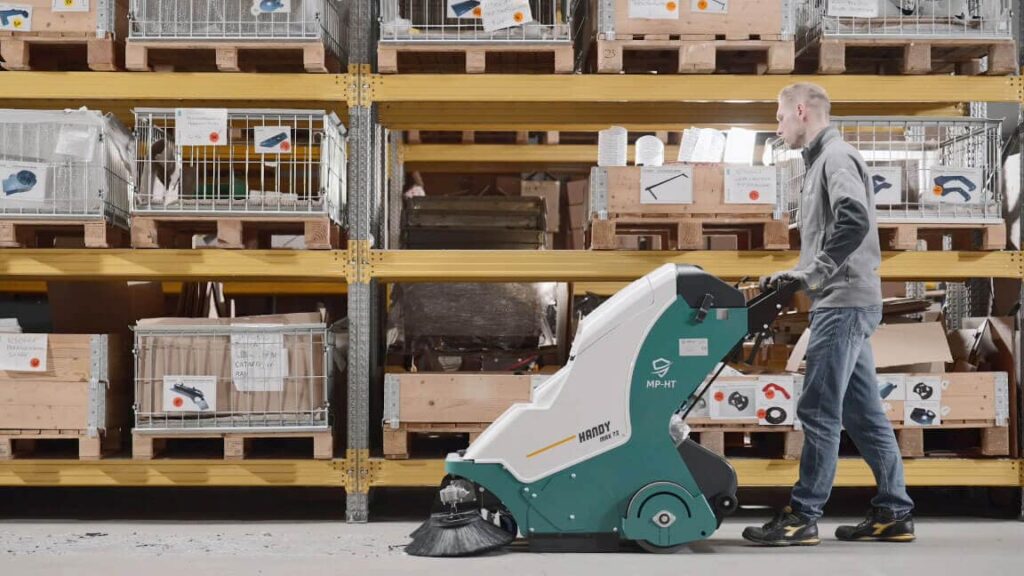
Walk-behind sweepers are the ideal solution for small to medium-sized areas (generally up to 2,500–4,000 m²/h) and for spaces characterized by narrow aisles or passages obstructed by objects. Thanks to an extremely tight turning radius and minimal overall dimensions, they ensure maximum maneuverability in tight spaces.
Discover our range of walk-behind sweepers.
Ride-on sweepers, on the other hand, are indispensable for large areas (generally over 4,000 m²/h) or for extended cleaning sessions. The seated driving position minimizes operatorfatigue, increasing hourly productivity thanks to higher travel speeds and a wider cleaning swath.
Explore our line of ride-on sweepers.
5. Battery or internal combustion engine
The choice of power source directly affects range, operating costs, hill-climbing capability, and permitted operating conditions.
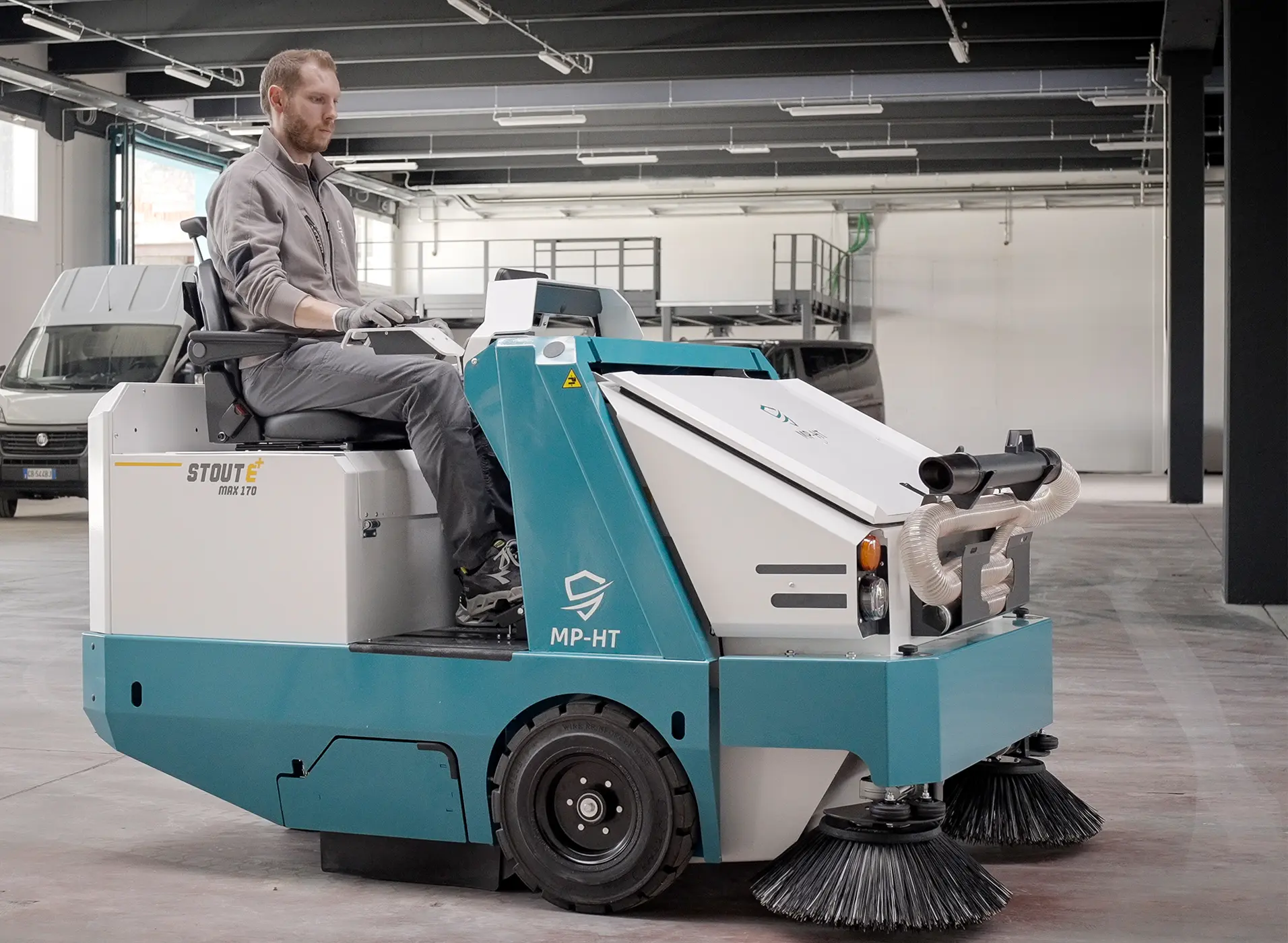
The battery-powered electric sweepers are the standard for indoor spaces because they produce no exhaust fumes and are quiet. Unlike traditional models that are simply “electrified,” the MP-HT machines are born electric vehicles, eliminating the hydraulic components in favor of electric motors to high efficiency so that the consumption are reduced at a minimum. One example is the STOUT E+, theonly in its category at 24V with a low absorption of just 110 Ah/h. Such low power consumption makes it possible to use more compact battery packs, fast to be recharged and economic. The lithium technology It also ensures consistent performance without any loss of power and with quick top-ups to cover more shifts.
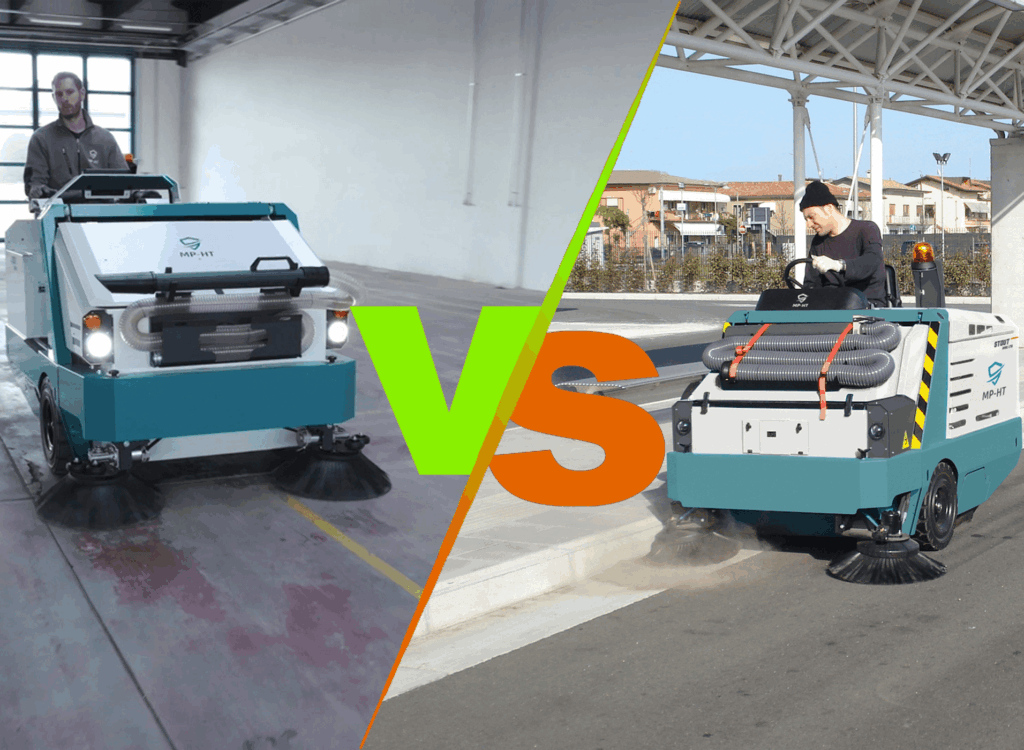
Sweepers with (diesel or LPG) remain the ideal solution for heavy-duty use in large outdoor areas, construction sites, or logistics yards. They offerunlimited operating time (limited only by refueling) and maximum continuous power, but require more mechanical maintenance and, in many countries, cannot be used indoors.
The items that affect the total cost
When purchasing a professional sweeper, the initial price is only part of the investment. To assess the true cost over time, you need to consider components subject to normal wear and tear—such as center and side brushes, dust-containment blades, filters, and seals—as well as battery management.
Added to these costs is the fuel expense for combustion-engine models: a factor that is often underestimated but that affects the total operating cost—sometimes much more significantly—than the energy costs required to recharge and, if necessary, replace battery packs.
To ensure consistent performance and extend the machine’s service life, it is essential to adhere to the recommended replacement intervals for consumables as specified in the user manuals. Proper routine maintenance and thorough cleaning at the end of each shift help prevent sudden breakdowns and costly downtime, which often represent the most significant expense for a company.
Decision Chart: From Your Situation to the Right Category
Based on the characteristics of your workspace, refer to the table below to find the operating scenario that best matches your needs, so you can identify the most suitable MP-HT configuration and model:
Book a site survey and free demo
The Most Common Mistakes When Choosing
Sometimes people choose a professional sweeper primarily based on the initial purchase price, without considering build quality and the practical implications of daily maintenance.
Inexpensive but “fragile” machinery often ends up costing much more over time. In work environments, accidental impacts are a daily occurrence, and operators do not always pay the utmost attention: which is why the structure and housing must be made of high-strength metal —a material that can be repaired using standard metalworking techniques—unlike rotationally molded plastic bodies, which, if cracked or broken, require the complete and costly replacement of the entire unit.
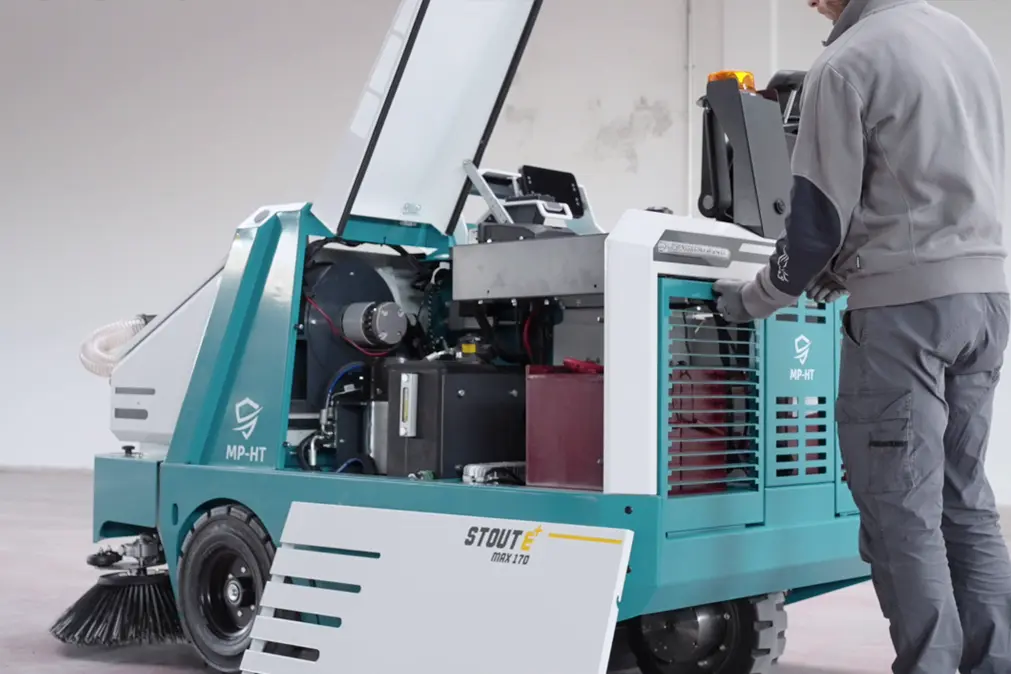
Equally crucial is the ease of inspecting consumables. If accessing brushes, filters, and gaskets requires complex tools or elaborate procedures, end-of-shift maintenance will inevitably be neglected, accelerating the machine’s wear and tear. Choosing high-quality components and a mechanical design that allows for quick inspections and cleaning ensures consistent performance over time, preventing sudden and costly machine downtime.
Finally, evaluating a machine solely on the basis of price carries the real risk of purchasing equipment that is impractical or uncomfortable to use—equipment that operators would end up avoiding, leaving it forgotten in a corner of the warehouse as a wasted investment. Choosing a sweeper that is intuitive, ergonomic, and a pleasure to operate ensures thatthe operator will be happy to use it every shift, guaranteeing consistently clean environments and protecting your investment.
Frequently Asked Questions
- How many square meters per hour does an industrial sweeper clean?
Walk-behind models typically cover 2,000–4,000, while ride-on models reach 6,000–12,000.
- How long does a professional sweeper last?
With a metal frame and body and proper maintenance, a professional sweeper easily lasts more than 10 years or 3,000–5,000 hours of operation.
- Do you need a driver’s license to operate one?
No, no driver’s license is required for use within private areas and facilities. However, the operator must receive training on workplace safety regulations. For outdoor use, only models approved for road use require a driver’s license as specified by the Highway Code.
- Is it better to rent or buy?
Purchasing is the best option for continuous, daily use over time. Renting is ideal for seasonal needs, temporary spikes in workload, or for those who prefer a fixed monthly fee that includes maintenance without tying up capital.
- Can the same machine be used both indoors and outdoors?
Yes, provided you choose a sturdy, battery-powered electric model. It eliminates fumes indoors, and—if it has shock absorption and a raised filter—it can easily handle outdoor yards and uneven surfaces as well.